Giro D Italia 2026 – Stage 4
Post Series: Giro D Italia 2026
- 1.Giro D Italia 2026 – Stage 1
- 2.Giro D Italia 2026 – Stage 2
- 3.Giro D Italia 2026 – Stage 3
- 4.Giro D Italia 2026 – Stage 4
- 5.Giro D Italia 2026 – Stage 5
- 6.Giro D Italia 2026 – Stage 6
- 7.Giro D Italia 2026 – Stage 7
- 8.Giro D Italia 2026 – Stage 8
- 9.Giro D Italia 2026 – Stage 9
- 10.Giro D Italia 2026 – Stage 10
- 11.Giro D Italia 2026 – Stage 11
- 12.Giro D Italia 2026 – Stage 12
- 13.Giro D Italia 2026 – Stage 13
- 14.Giro D Italia 2026 – Stage 14
- 15.Giro D Italia 2026 – Stage 15
- 16.Giro D Italia 2026 – Stage 16
- 17.Giro D Italia 2026 – Stage 17
Catanzaro → Cosenza | 138.0 km | hilly
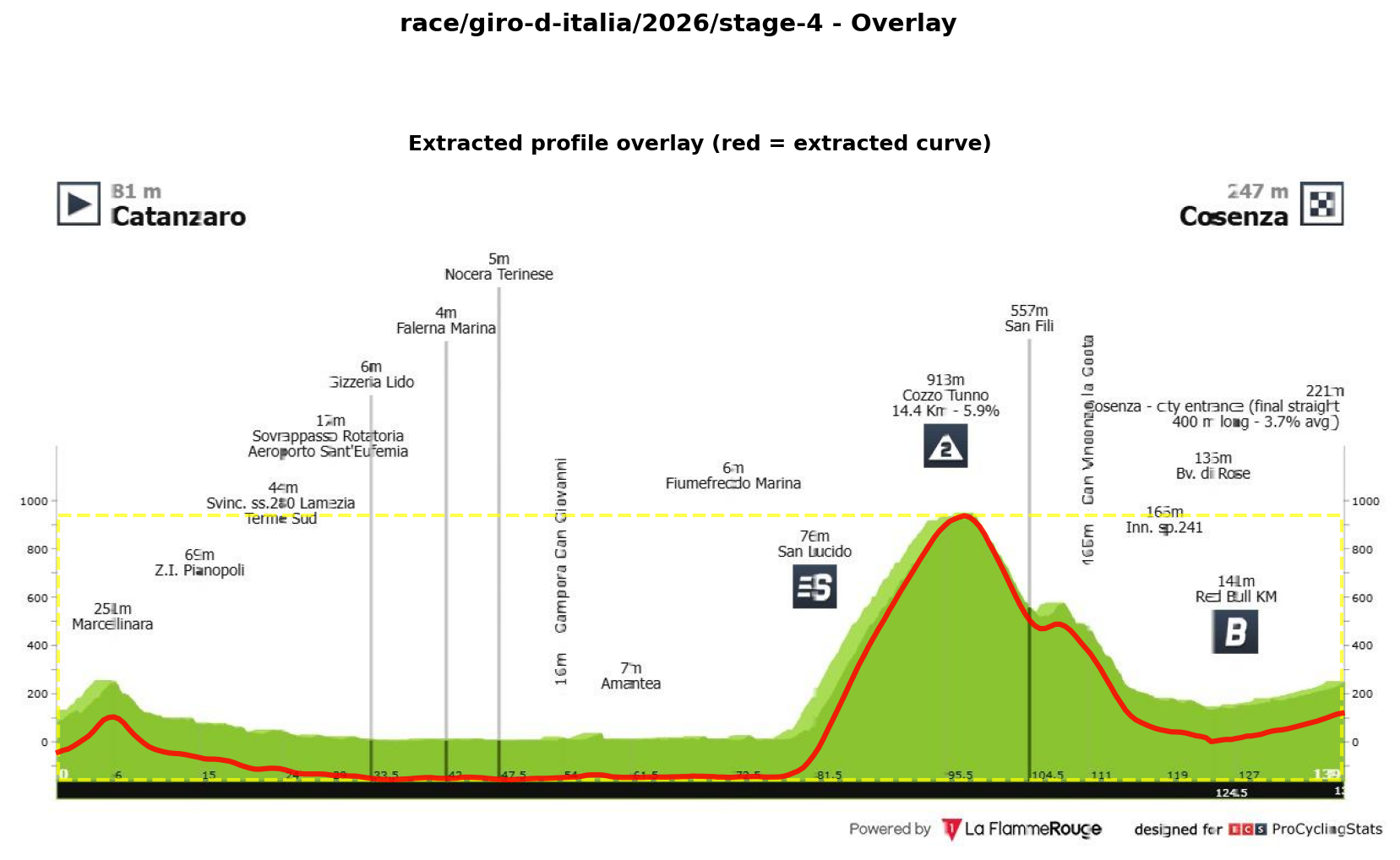
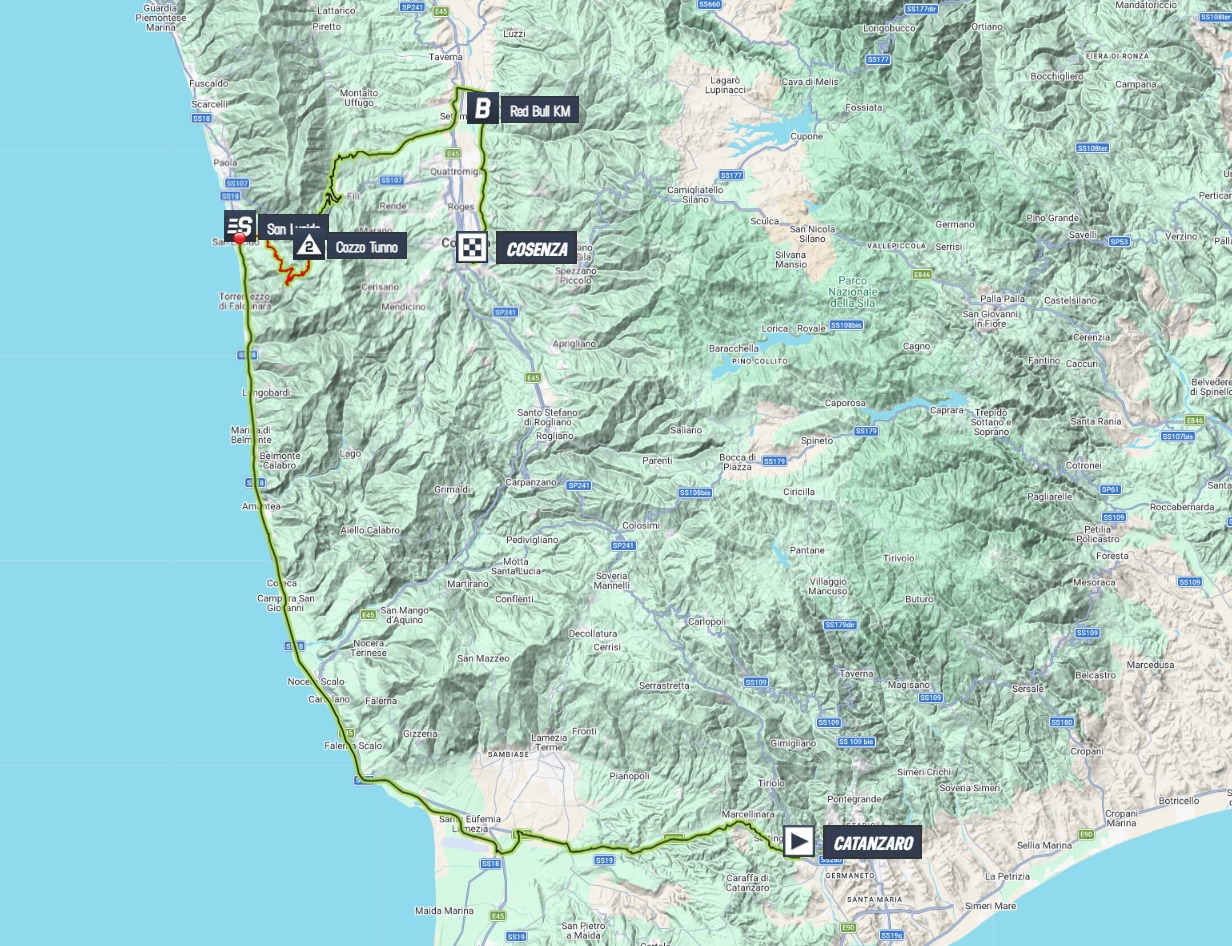
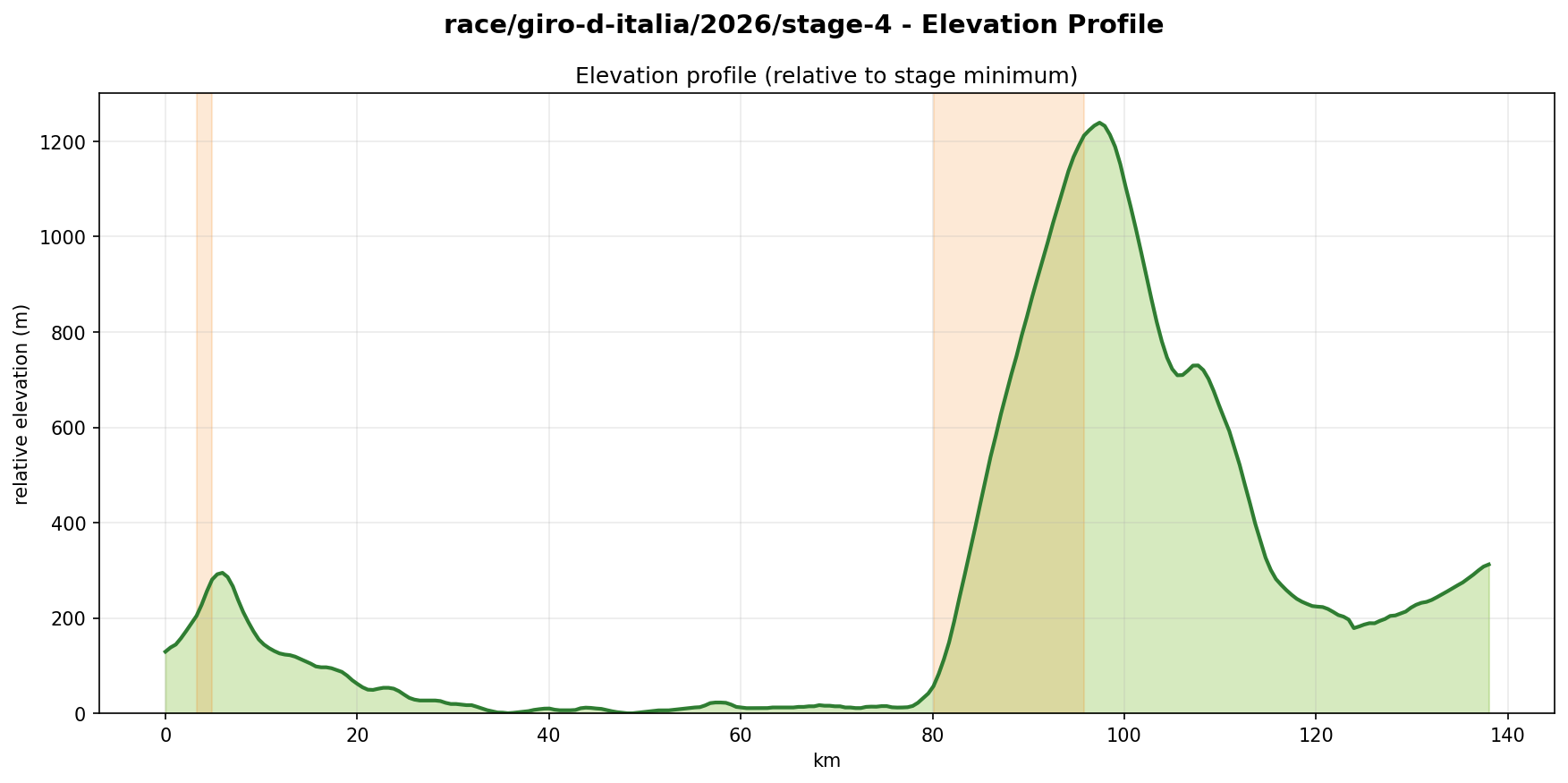
Riders will face an interesting ride through Calabria that sap the legs and punish any lapses in positioning. With a major ascent of Cozzo Tunno (14.4km at 5.9% at km 82) and less flat than today to regroup, this short 138.0km stage will likely tempt aggressive breakaway hunters looking to outfox the sprinters.
The Route
The day from Catanzaro will start gently, the race rolling out of the city onto a plateau of small rises and dips that will not trouble the peloton but will invite the early break to form. After a brief bump in the opening kilometres the route will settle into a long drag, the profile flattening as the riders will track south-west towards the Tyrrhenian. This middle portion will be fast and controlled, with teams of sprinters and puncheurs alike keeping an eye on the gap ahead, knowing that the real test will loom inland.
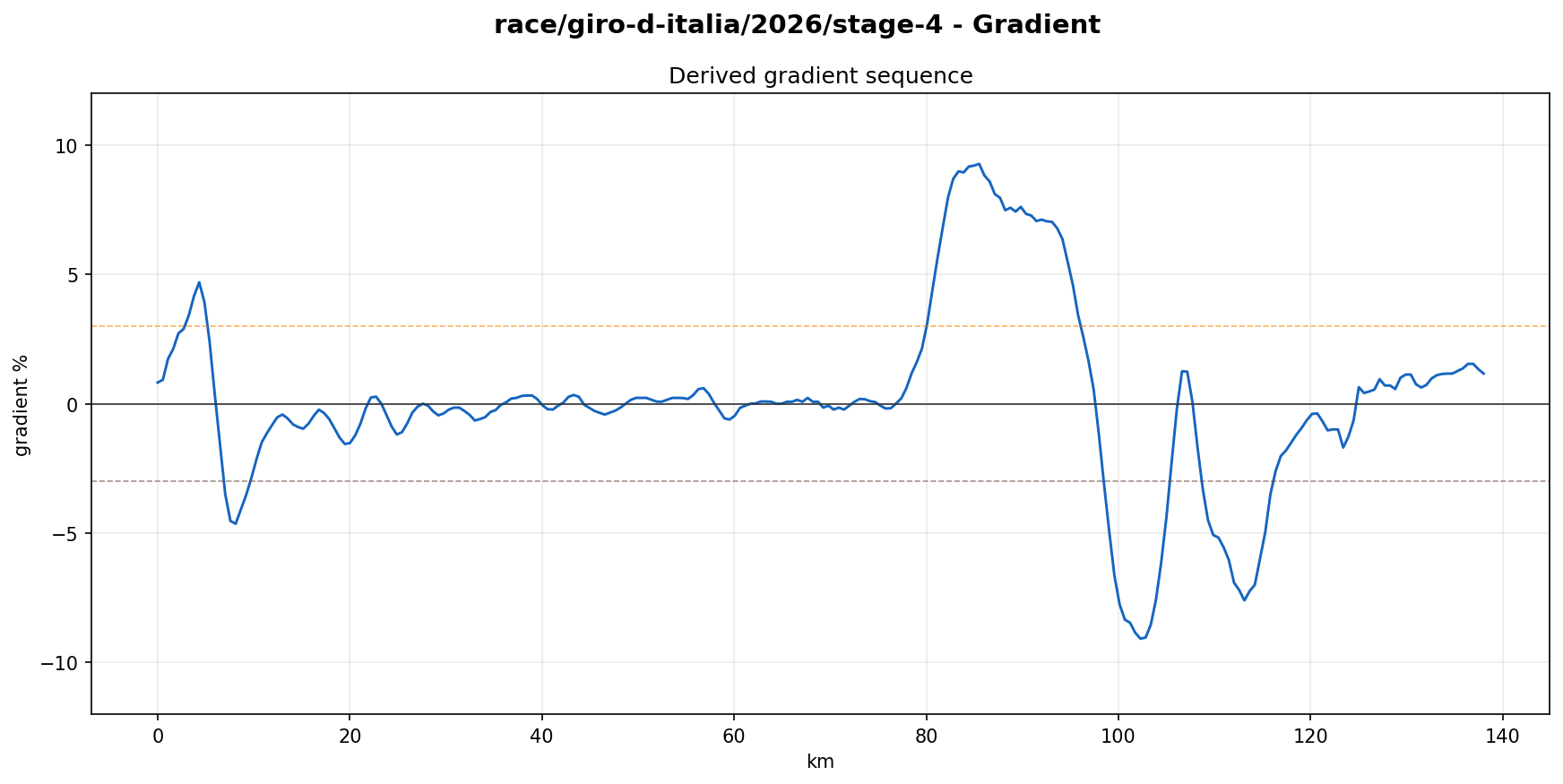
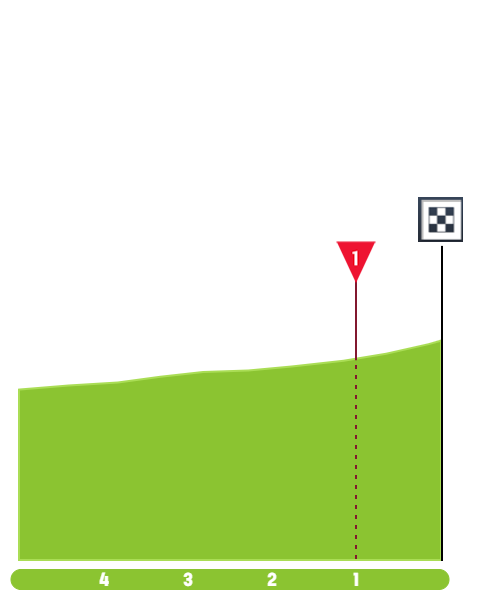
That test will come in the form of Cozzo Tunno, 14.4km at 5.9%, a long, regular haul that will lift the race away from sea level and into the Calabrian interior. Here the stage will bite: the tempo will thin the bunch, the pure sprinters will be on the limit, and punchier riders and breakaway specialists will sense an opportunity. The descent that follows will be technical at first before easing into a more rolling approach to Cosenza, where a final drag into town and an uphill finishing straight will reward those who can still sprint after a hard day in the saddle. It will be a day that might favour hardy fast finishers and puncheurs from a reduced group, but a strong breakaway could also cling on if the chase behind hesitates.
Key Climbs:
- Cozzo Tunno — 14.4km at 5.9%, km 82
Weather
20°C | Dry | 11 km/h W
- Cross/tailwind on the main climb. But given current wind speeds, won’t meaningfully influence the race.
How It Might Unfold
A lively start will see punchy climbers and all-rounders trying to form a sizeable break, knowing Cozzo Tunno will offer a real shot at the win. Teams with fast-finishing puncheurs will likely allow a move some rope but keep it within reach, while pure sprinter squads might hesitate to invest heavily given the climbing. With Strong and Vendrame hurt in a large crash in stage two, we might see these teams rather send opportunists into the breakaway rather than chase. A big question mark that remains: is whether Astana will ride to protect Silva’s jersey, or whether they will put a rider like Scaroni into the breakaway to reduce pressure on their squad to perform most of the chasing duties. It’s most likely they will police that a non-dangerous breakaway goes loose and afterwards will just maintain a steady pace in the peloton throughout the day. That increases chances of a reduced bunch sprint.
The real selection in the breakaway could well happen on Cozzo Tunno, where GC teams and puncheur-heavy squads might raise the pace to shed the heavier sprinters and thin the break. A small group of strong climbers and resilient finishers could crest together and tackle the descent with daylight over a splintered peloton. From there, late attacks on the rolling run-in will be possible, but the draggy final kilometres are likely to favour a reduced sprint between puncheurs and hardy all-rounders rather than a mass kick. In the peloton, the main sprinters are likely to drop, with Tobias Lund Andresen as a borderline case, which might interest Decathlon to set-up a chase after all. The same holds true for Movistar as they have Orluis Aular among their ranks. Bahrain would normally do the same for Eduardo Zambanini, but his form is unknown after his crash on stage two.
Contenders
In a controlled race Tobias Lund Andresen is sure to survive the climb and has a good sprint on him. Paul Magnier has been tremendous so far, and as long as no team attempts to explode the peloton in the first (steepest) kilometers, there’s a good possibility that he can either hang on, or return in time. Other sprinters who could endure these type of climbs are Orluis Aular and Ben Turner. If Ethan Vernon somehow manages to survive the climb, he’s got a really good punch on him for the slight uphill drag.
If a breakaway makes it to the finish line or the peloton is to explode on the climb, the UAE riders will stand out as the obvious cards for that. Igor Arrieta, Jonathan Narvaez and Jan Christen will stand out as the obvious breakaway cards. However: Jan Christen has a bigger opportunity to come (stage 5) and Jonathan Narvaez’ form is unknown after the crash. Magnus Sheffield could play a similar role from a stronger team structure, covering dangerous moves and gambling on a small sprint if the biggest climbers hesitate. Same holds true for Filipo Ganna, who will be excited about the fact that the race returns to Italy today.
We will most likely see a reduced bunch sprint with a mix of well climbing sprinters and puncheurs battle it out for the stage, after Astana holds things together on the climb.
Predictions
1. ⭐⭐⭐ Paul Magnier
2. ⭐⭐ Tobias Lund Andresen
3. ⭐⭐ Orluis Aular
4. ⭐ Ethan Vernon
5. ⭐ Igor Arrieta
6. ⭐ Michael Valgren
7. ⭐ Filipo Ganna
8. ⭐ Edward Planckaert
9. ⭐ Jonathan Narvaez
10. ⭐ Guillermo Silva
Predicted Winner
Paul Magnier
Wins dragging uphill sprint from a reduced peloton.