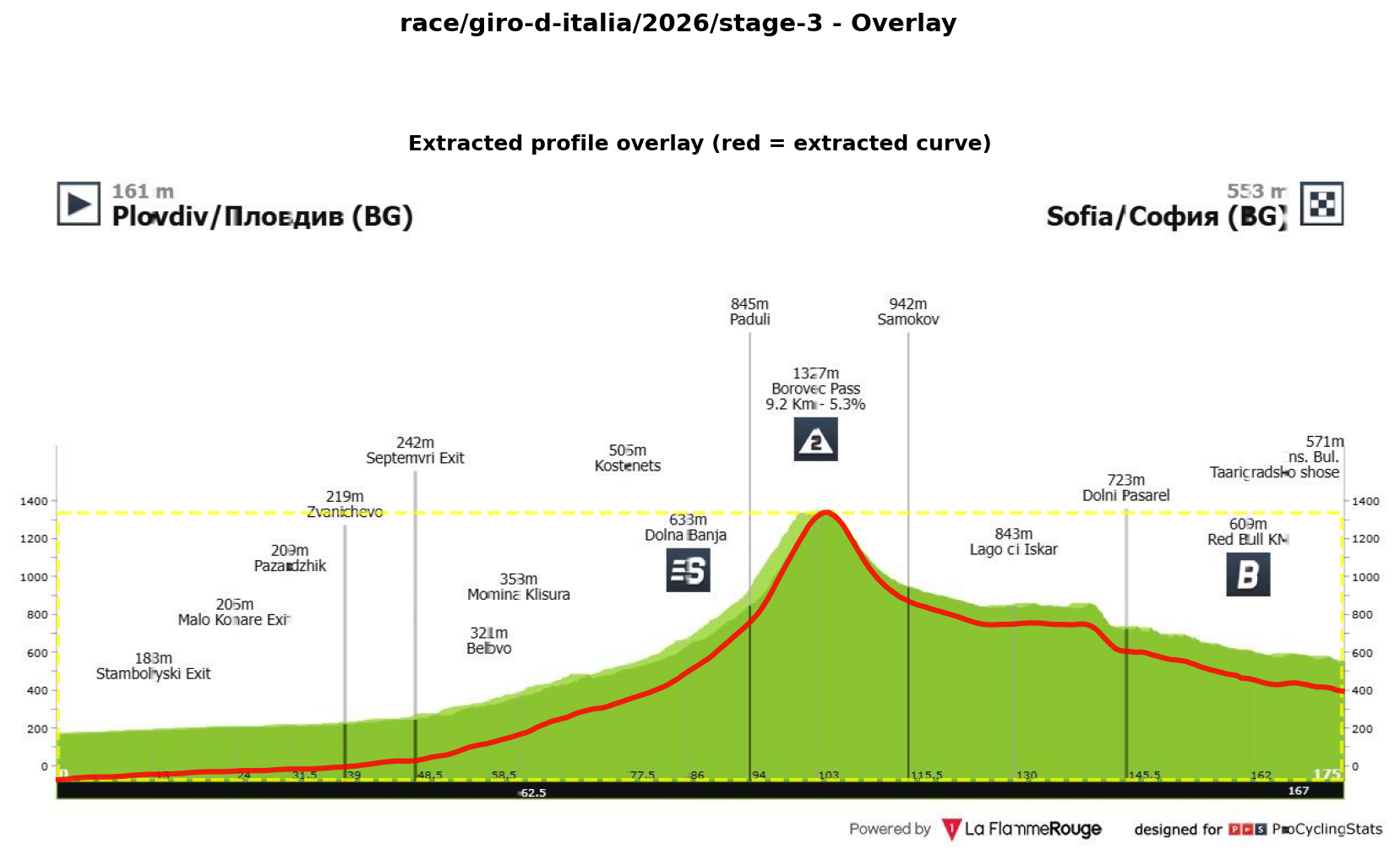
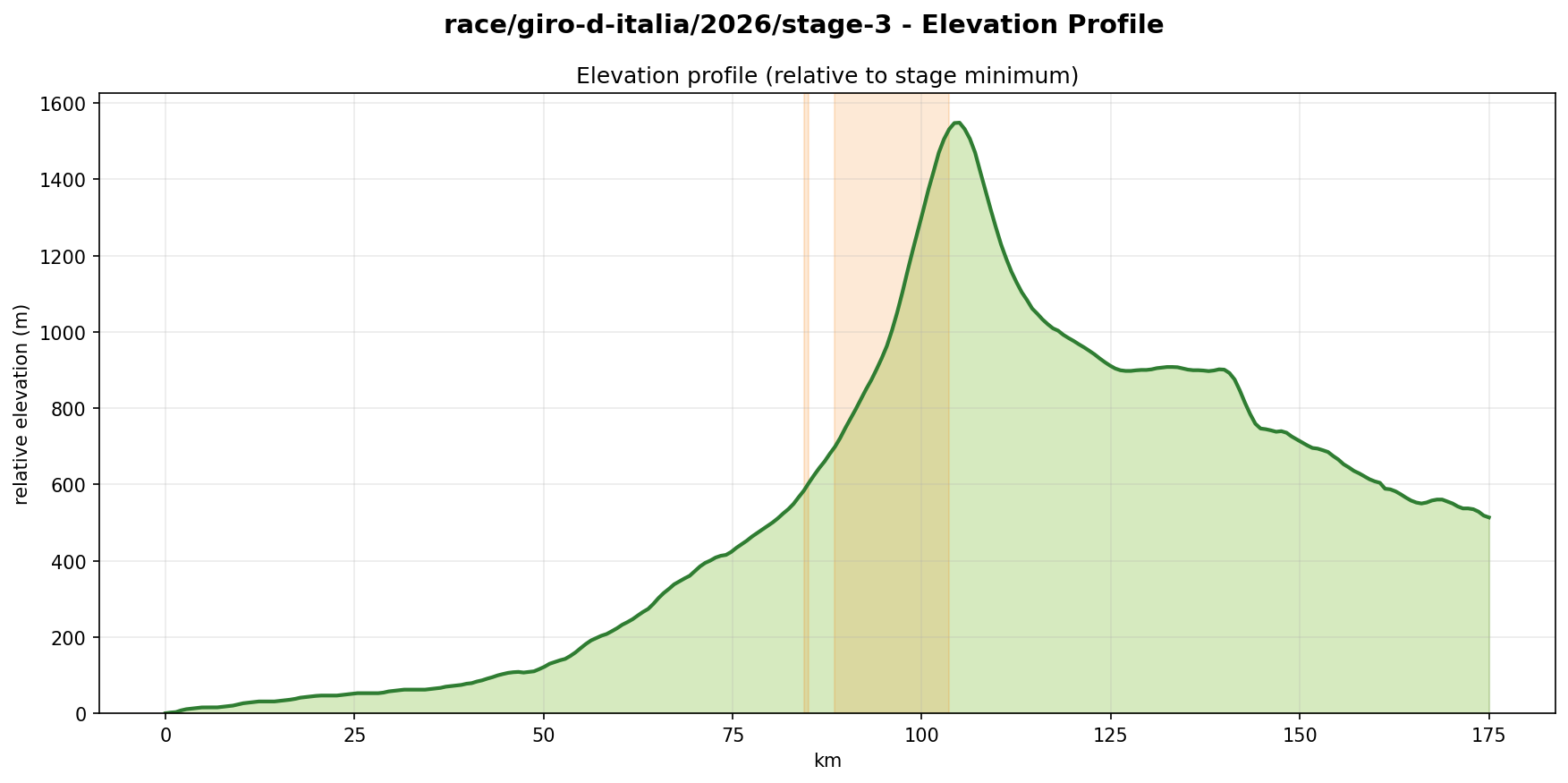
Riders will tackle a rolling 175.0 km route with a large lump in the middle of the stage. This hilly profile, featuring 1577 m of elevation and a key 9 km climb at 5.5% around halfway, might tempt breakaway specialists to gamble early while testing how much control the sprinters’ teams can impose after today’s crashes.
The Route
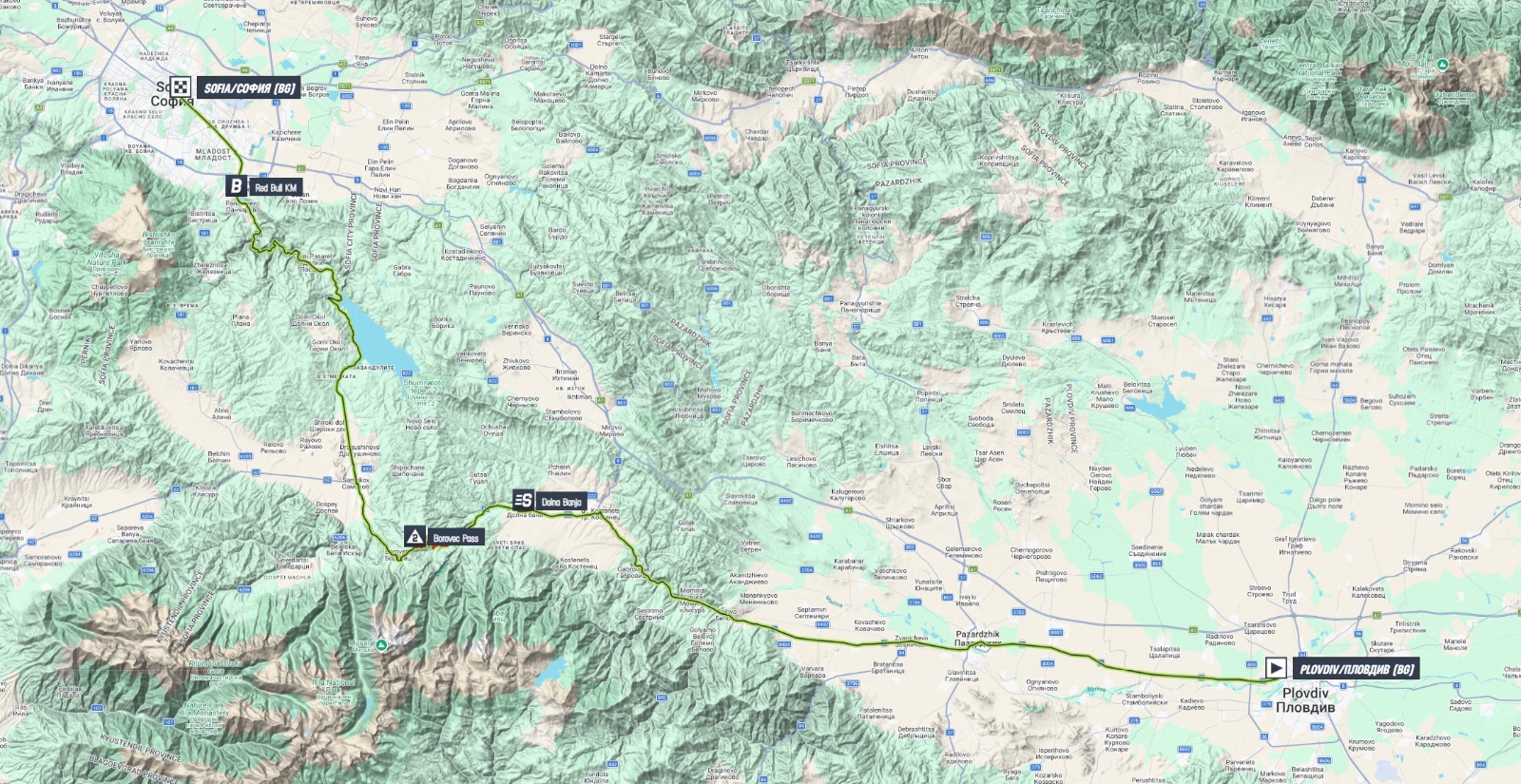
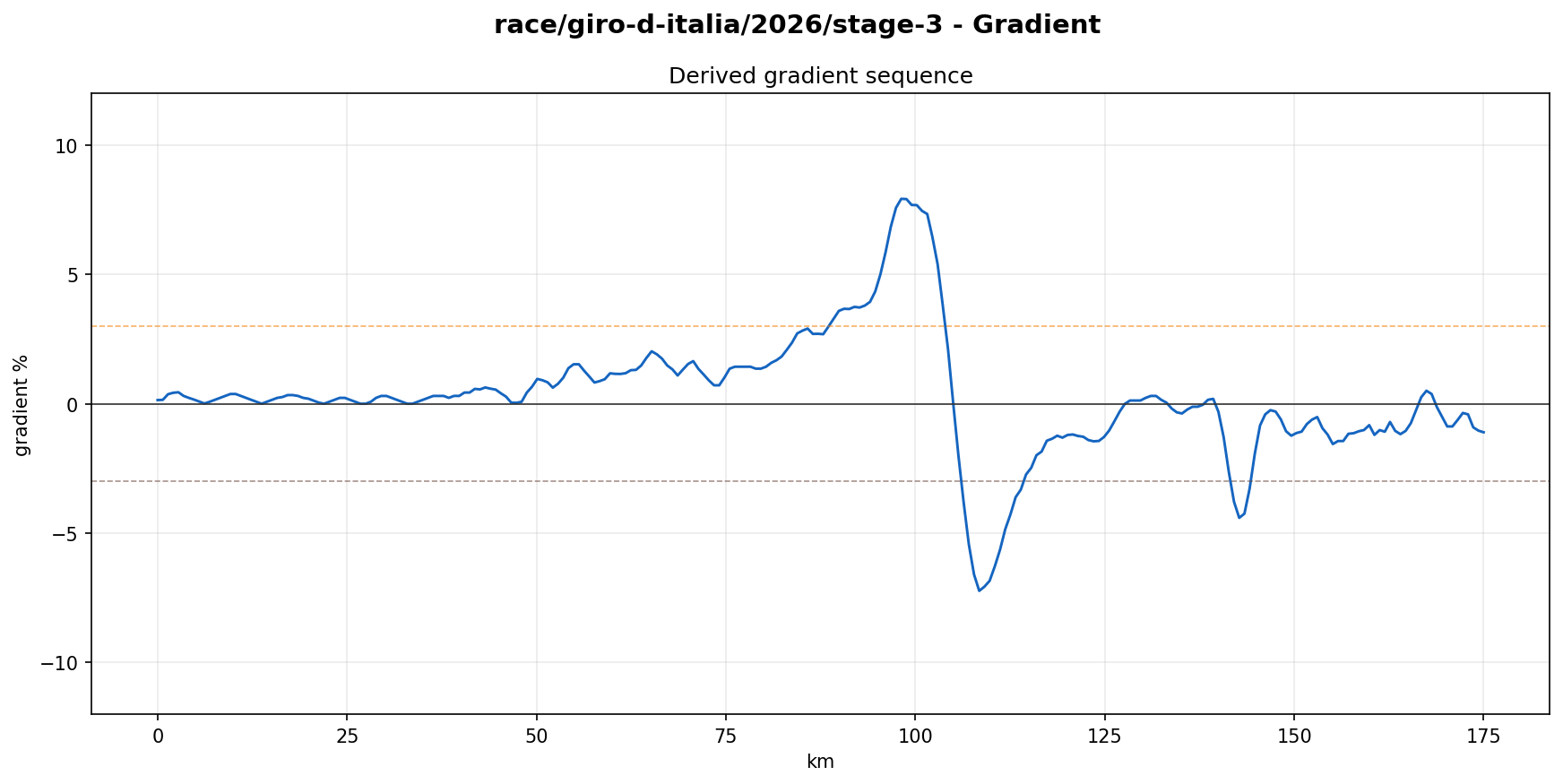
From Plovdiv the road will rise almost imperceptibly at first, dragging up the valley on broad, fast roads that will let the break establish but also keep the peloton relatively calm. The profile will tighten as the race approaches Dolna Banja, the foothills stacking up under the riders until the route tips onto the long ascent that will define the day: 9 km of steady climbing at 5.5% at around kilometre 88, taking the race high towards the Borovets area. It will not be brutally steep, but its length and the accumulated drag beforehand will encourage the teams with better climbing sprinters to test the pure sprinters’ reserves and perhaps even tempt some GC teams into raising the tempo.
From the high point the stage will tilt down towards Sofia in a drawn‑out descent that will gradually mellow into rolling terrain. The long stretch home from the top of the climb will give teams whose sprinter dropped plenty of time to return to the bunch. Once the road settles into a gentle downhill and false flats, the balance will swing back towards organised sprint trains. The final run‑in through the outskirts of the capital will be quick rather than technical, suiting powerful finishers who can survive a hard mid‑stage climb and still produce a sharp kick. A bunch sprint looks most plausible this early in a grand tour. The climb is simply not hard enough and too far out of the finish line.
Key Climbs:
9km climb at 5.5%, km 88 (max 8%)
Weather
20°C | Sunny | 9 km/h WNW
How It Might Unfold
Versatile breakaway hunters will likely try to form a sizeable move early, knowing the single major climb around halfway could suit them to build out their advantage. Teams with fast finishers will keep a lid on the gap, aiming to crest the climb within striking distance. GC squads will ride attentively but should let the sprinter teams assume most of the responsibility, as the early rolling terrain will not be especially threatening.
A selection might come on the main climb near km 88, where teams who have better climbing sprinters like Decathlon, will try to force a split and distance the pure sprinters and the sprinters who are still hurt from stage 1’s crash (Dylan Groenewegen, Kaden Groves). A committed group going over the top together could drive the fast descent and rolling run‑in, making it hard for dropped sprinters team to regain contact. Teams like TREK might have to burn valuable men if they have to bring Jonathan Milan back to the peloton, which they will miss during their lead-out.
Contenders
Among the fast men, Jonathan Milan will still stand out as one of the clearest favourites. Despite the messy sprint, there are rumors that he produced over 2000W during his stage 1 sprint. He also finished relatively short in stage 2, confirming that his form is fine.
Paul Magnier and Tobias Lund Andresen will represent the main alternative archetype: explosive sprinters who are clearly in good shape. Dylan Groenewegen en Kaden Groves might be especially dangerous if they are recovered from stage 1’s crash. Ethan Vernon will be more dependent on positioning.
Relentless climbing will stack up the fatigue before the final ascent to Pila, where the gradients will invite explosive attacks and punish any weakness. This will be a day when pure climbers and GC contenders alike could trade blows long before the summit, turning the race into a war of attrition.