Giro D Italia 2026 – Stage 16
Post Series: Giro D Italia 2026
- 1.Giro D Italia 2026 – Stage 1
- 2.Giro D Italia 2026 – Stage 2
- 3.Giro D Italia 2026 – Stage 3
- 4.Giro D Italia 2026 – Stage 4
- 5.Giro D Italia 2026 – Stage 5
- 6.Giro D Italia 2026 – Stage 6
- 7.Giro D Italia 2026 – Stage 7
- 8.Giro D Italia 2026 – Stage 8
- 9.Giro D Italia 2026 – Stage 9
- 10.Giro D Italia 2026 – Stage 10
- 11.Giro D Italia 2026 – Stage 11
- 12.Giro D Italia 2026 – Stage 12
- 13.Giro D Italia 2026 – Stage 13
- 14.Giro D Italia 2026 – Stage 14
- 15.Giro D Italia 2026 – Stage 15
- 16.Giro D Italia 2026 – Stage 16
- 17.Giro D Italia 2026 – Stage 17
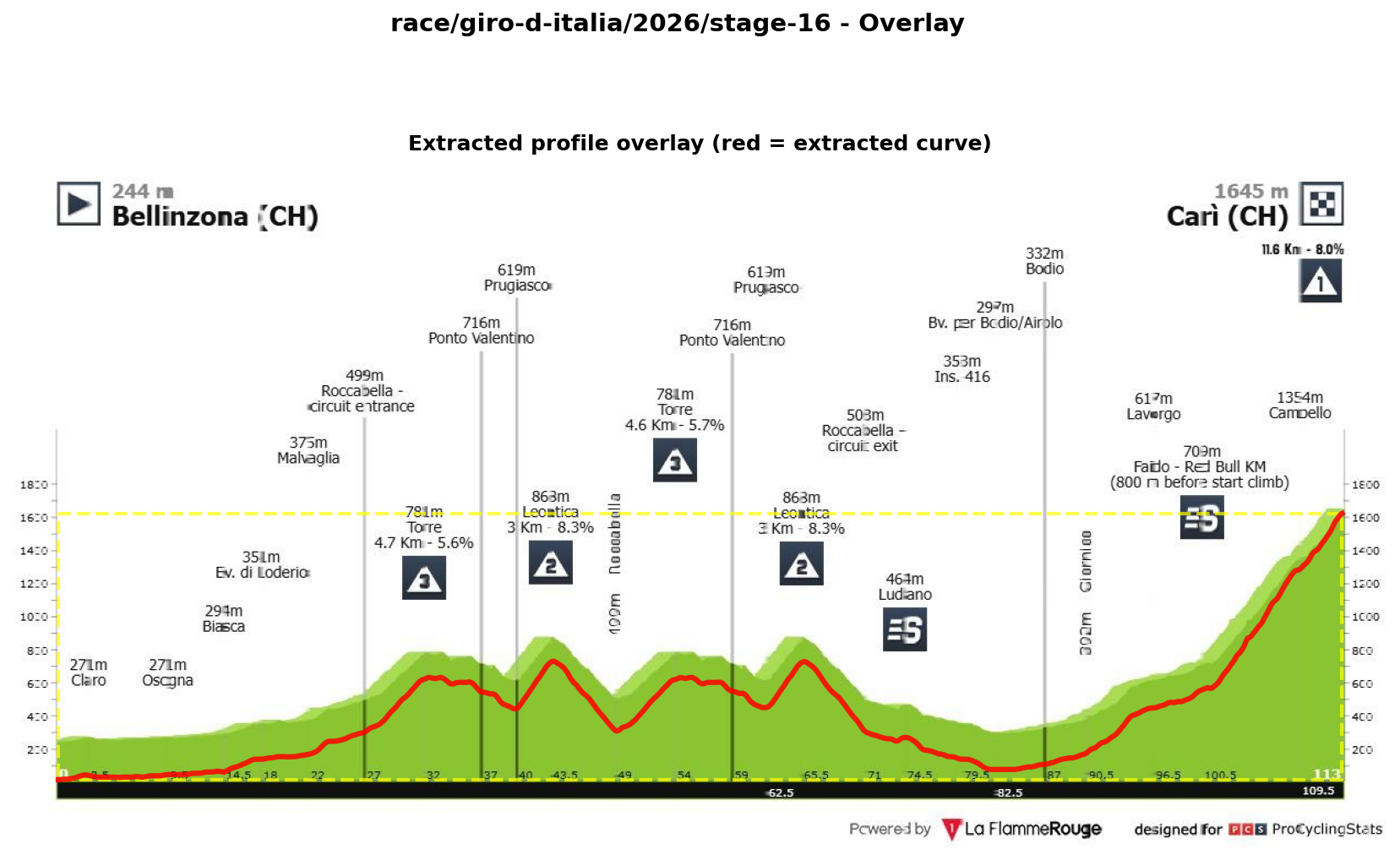
Bellinzona → Carì | 113.0 km | mountain
A brutal summit finish at Carì will squeeze maximum damage from a relatively short 113.0 km day, piling nearly all its difficulty into a relentless final 11.6 km ascent at 8.0% where pure climbers will thrive. With tired legs deep into the race, this stage could expose cracks in GC contenders’ armour and might tempt aggressive attacks from riders still hunting time or a breakthrough victory.
Previous Stage Recap
Stage 15 from Voghera to Milan was billed as one of the flattest, most sprint-friendly days of the Giro, yet it turned into a showcase for the breakaway. Fredrik Dversnes and his three Italian companions rode off early and never lost faith, even as the peloton thundered behind on a day that ended up as one of the fastest stages in race history, with an average speed just over 51 km/h. On the final run-in through Milan, the quartet still held a slender advantage and braced for their own sprint.
In that four-up dash to the line, Dversnes proved the sharpest, taking a landmark win for Uno-X Mobility ahead of Mirco Maestri, Martin Marcellusi and Mattia Bais. Behind them, the sprinters’ teams could only mop up the minor placings, with Paul Magnier leading the bunch home ahead of Dylan Groenewegen, Tobias Lund Andresen and Ethan Vernon on a day that frustrated the pure fast men and underlined how hard it already had been to control this Giro.
The Route
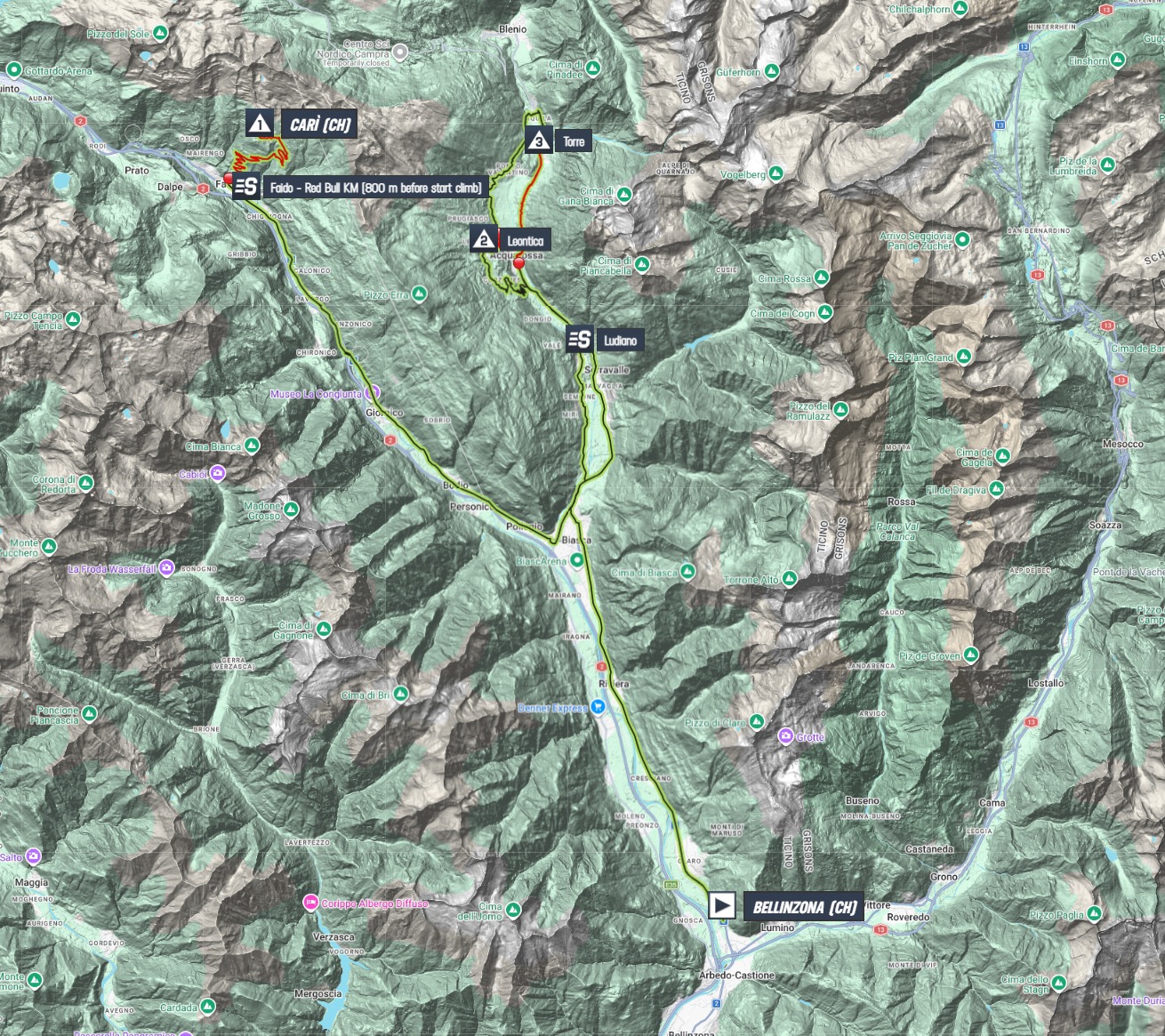
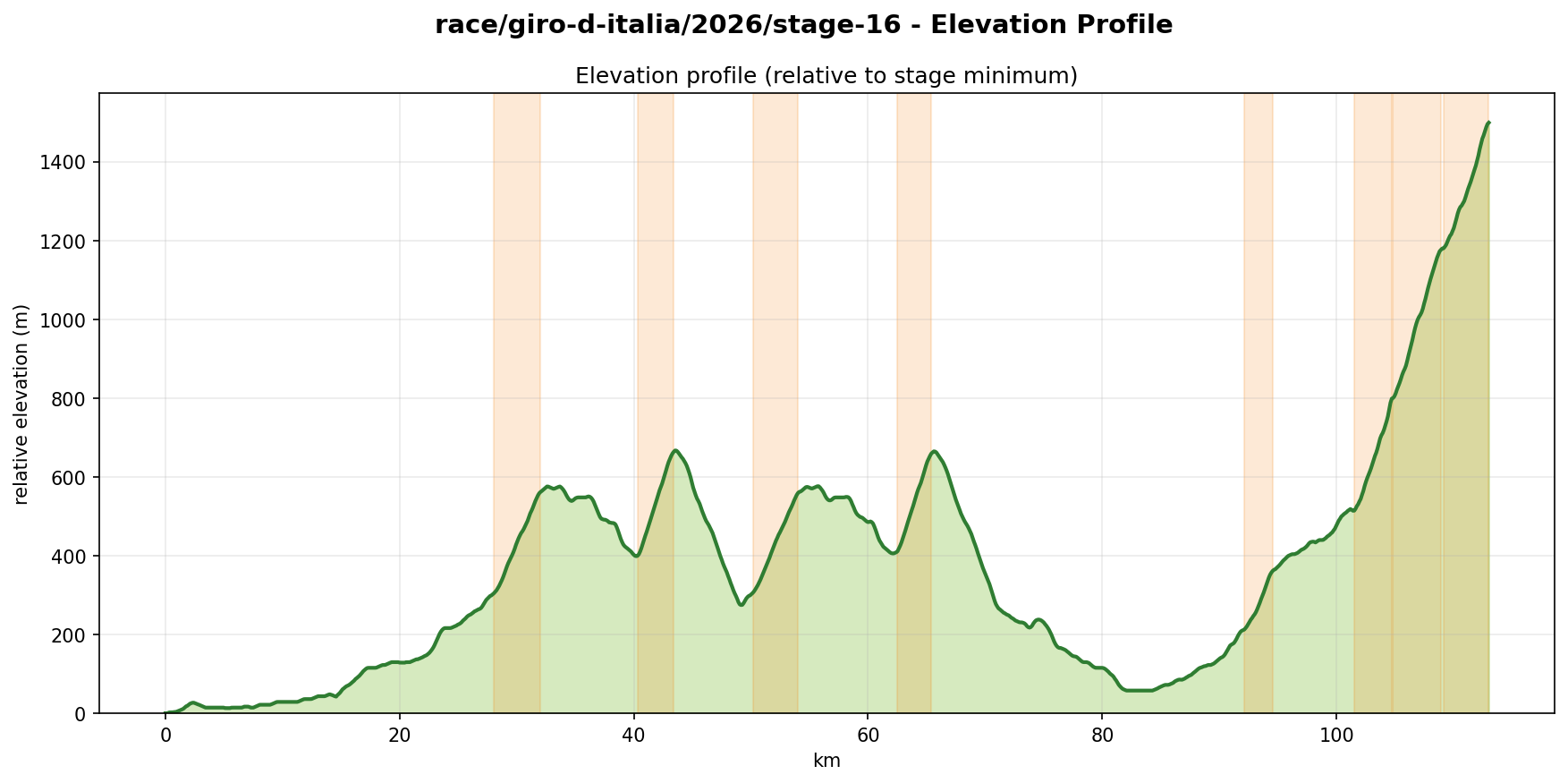
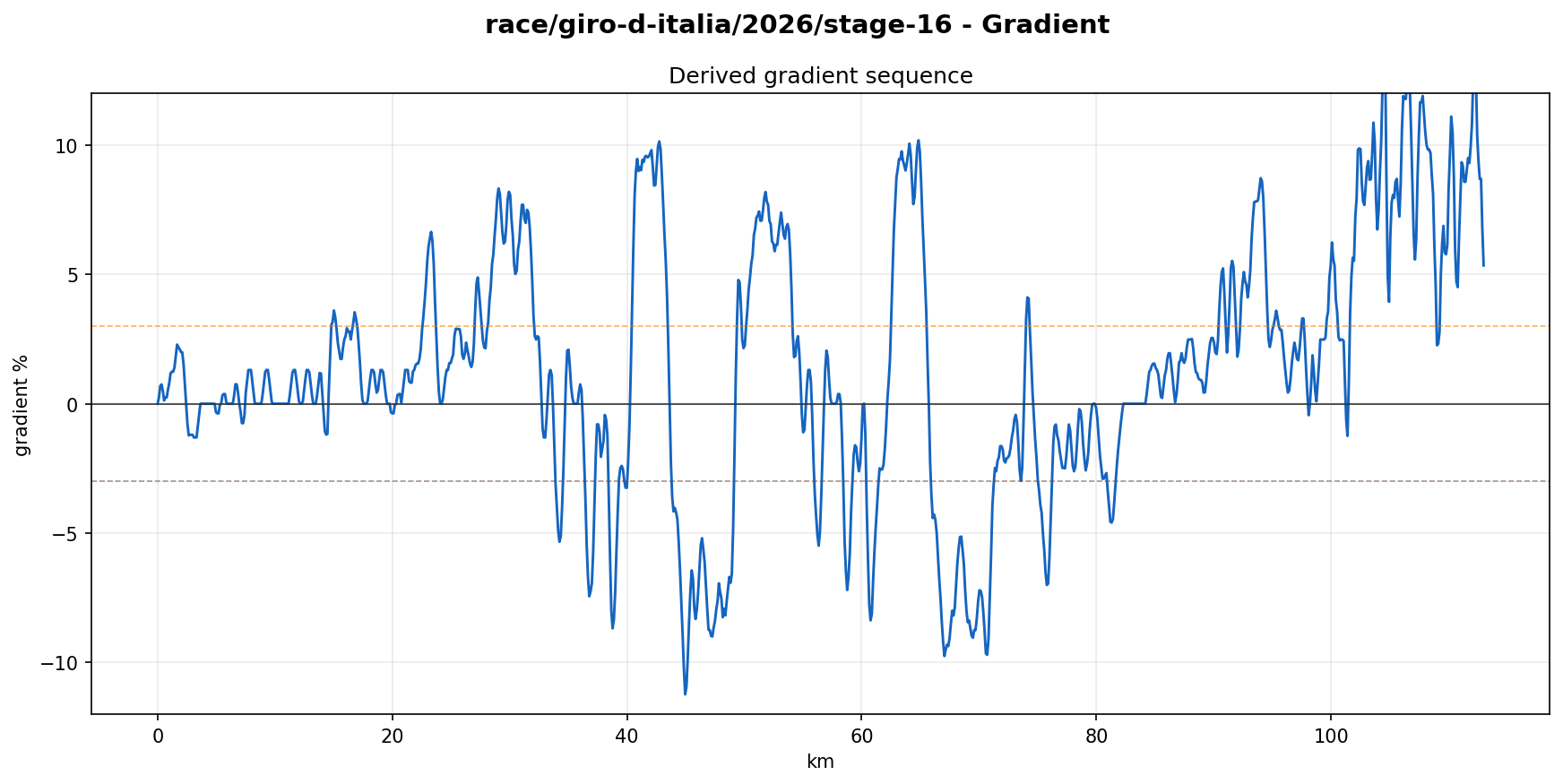
From Bellinzona the race will climb almost from the gun, the road tilting steadily upwards through the valley as the bunch stretches out and the breakaway forms. The terrain will already feel heavy by the time the riders hit the first real wall at Leontica, 3.0km at a bruising 8.2% at km 41. That burst of altitude, followed by a saw‑toothed sequence of smaller ascents and drops, will ensure there is no real rhythm in the middle of the stage: teams will burn domestiques, the race will fragment, and the day’s escapees will either be established or exposed before the valley floor returns.
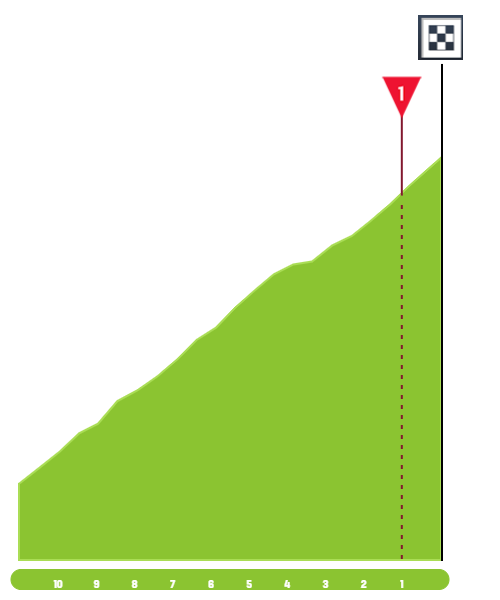
After a long, deceptive run-in where the road gradually creeps uphill again, the stage will pivot onto the final climb to Carì, 11.6km at a relentless 8.0% at km 101. This is a classic summit finish: no gentle preamble, just an ever-steepening drag that will thin the bunch to pure climbers and GC leaders. The sustained gradient will reward riders who can sit at threshold for a long time rather than punch repeatedly, so pacing and team support at the base could prove crucial. The stage will suit lightweight GC contenders and pure climbers, whether they emerge from a controlled peloton or from a resilient breakaway that has survived the grind of the early hills.
Key Climbs:
- Leontica — 3.0km at 8.2%, km 41
- Carì — 11.6km at 8.0%, km 101
*11.6km from final summit to the finish.*
Weather
20°C | Clear | 10 km/h W
How It Might Unfold
The race will ignite quickly out of Bellinzona, with pure climbers and all-round breakaway specialists eager to establish a move before Leontica. Given the short distance and big mountain-top finish, GC teams will not be keen to give huge freedom, so the early tempo on Leontica could already thin the peloton and decide which escapees are allowed up the road. The rolling middle phase will then serve as a tug of war: attacking rouleurs and puncheurs trying to build a gap against GC squads keeping the leash tight and using teammates to patrol any dangerous outsiders. If the break contains only stage-hunters well down on time, it might be granted a couple of minutes, but anything more could provoke an early chase.
The decisive blows are likely to come on the final ascent to Carì, where the gradient will bite almost from the foot and sustained pacing from GC domestiques could shred both break and bunch. If the escape hits the climb with a modest advantage, the strongest pure climbers there could go one-on-one for the stage while GC leaders launch measured accelerations behind, looking for late time gaps. Should the peloton arrive closer, an explosive attack from a GC contender in the steeper middle ramps might turn it into a showdown among overall hopefuls rather than the break. The last kilometres will favour riders able to sustain a long solo effort, though a small group of two or three could still sprint for the win if the marking between favourites becomes cagey near the summit.
Contenders
Jonas Vingegaard and Felix Gall will headline the pure GC climbers, and a short, violent stage like this will suit their preference for high-tempo battles where teams can squeeze rivals from far out. Giulio Pellizzari and Jai Hindley will give BORA two options for this stage.
From the more aggressive side, Giulio Ciccone, Enric Mas, Einer Rubio, Wout Poels, Harold Martin Lopez, Alessandro Pinarello, Sepp Kuss and Aleksandr Vlasov will be obvious breakaway spearheads on a day that will tempt long-range raids. Finally, don’t count out Jan Christen as this stage finishes in Switserland. They could thrive if the big GC names hesitate behind, and Jumbo has no interests in the stage win. However, as it’s only a very short stage (113.0 km), it will be hard for them to build a commanding lead before the start of the final climb.
Predictions
1. ⭐⭐⭐ Jonas Vingegaard
2. ⭐⭐⭐ Einer Rubio
3. ⭐⭐⭐ Giulio Ciccone
4. ⭐⭐ Aleksandr Vlasov
5. ⭐ Sepp Kuss
6. ⭐ Giulio Pellizzari
7. ⭐ Jan Christen
Predicted Winner
Jonas Vingegaard
Other teams will ‘force’ him to grab the stage.