Tour De France 2026 – Stage 5
Post Series: Tour De France 2026
- 1.Tour De France 2026 – Stage 2
- 2.Tour De France 2026 – Stage 3
- 3.Tour De France 2026 – Stage 4
- 4.Tour De France 2026 – Stage 5
- 5.Tour De France 2026 – Stage 6
- 6.Tour De France 2026 – Stage 7
- 7.Tour De France 2026 – Stage 8
- 8.Tour De France 2026 – Stage 9
- 9.Tour De France 2026 – Stage 10
- 10.Tour De France 2026 – Stage 11
- 11.Tour De France 2026 – Stage 12
- 12.Tour De France 2026 – Stage 13
- 13.Tour De France 2026 – Stage 14
- 14.Tour De France 2026 – Stage 15
Lannemezan → Pau | 158.3 km | hilly
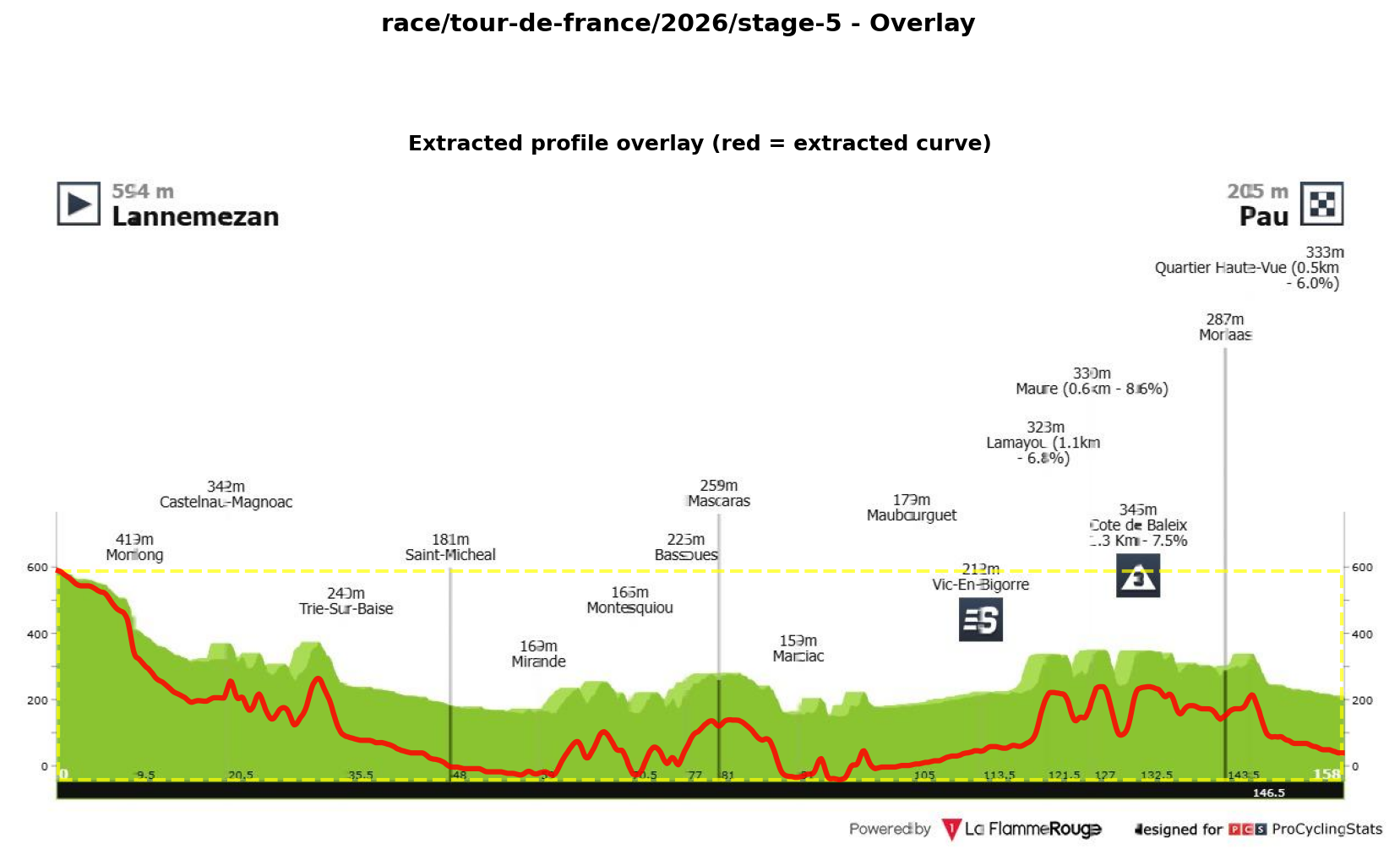
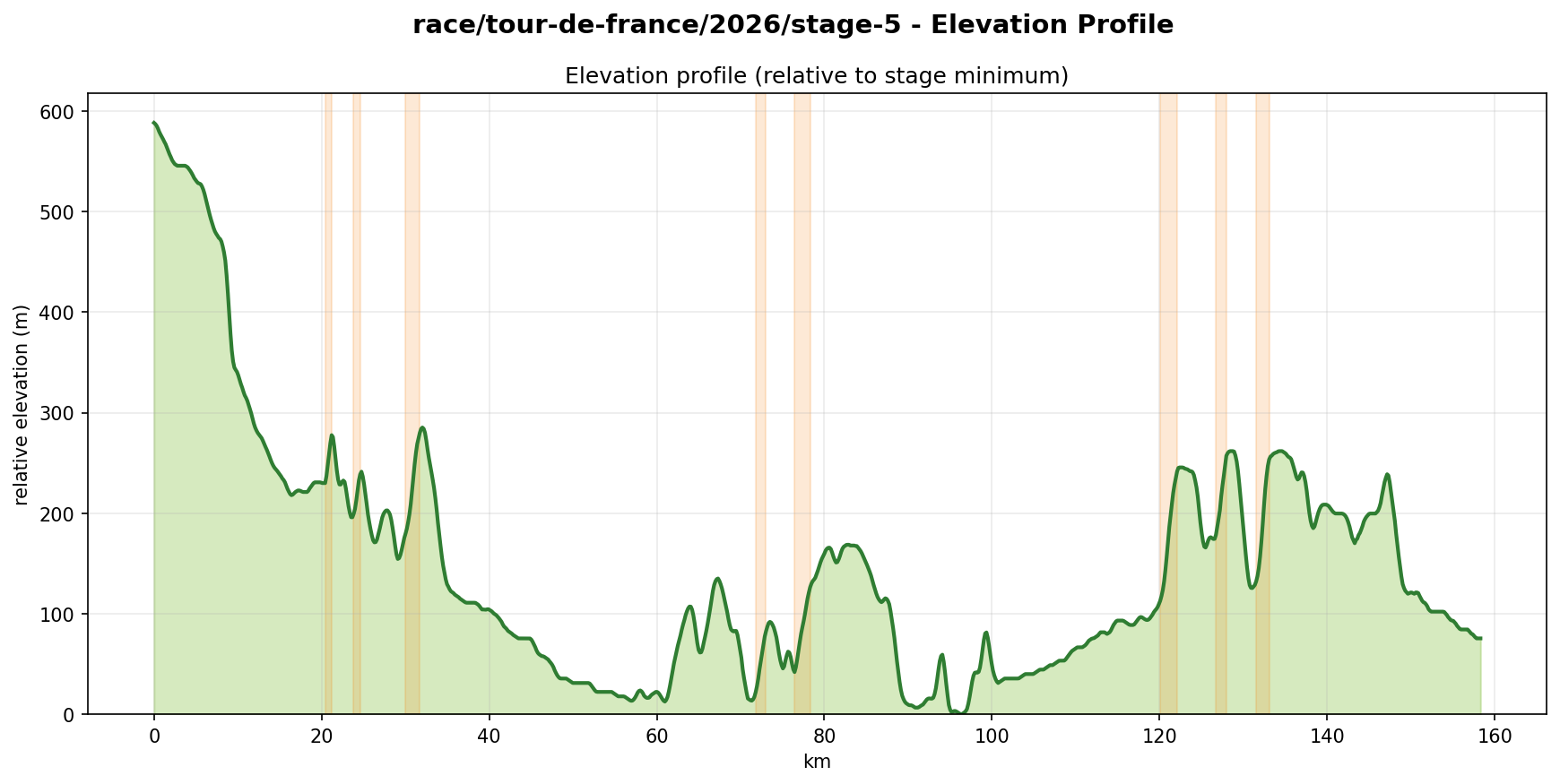
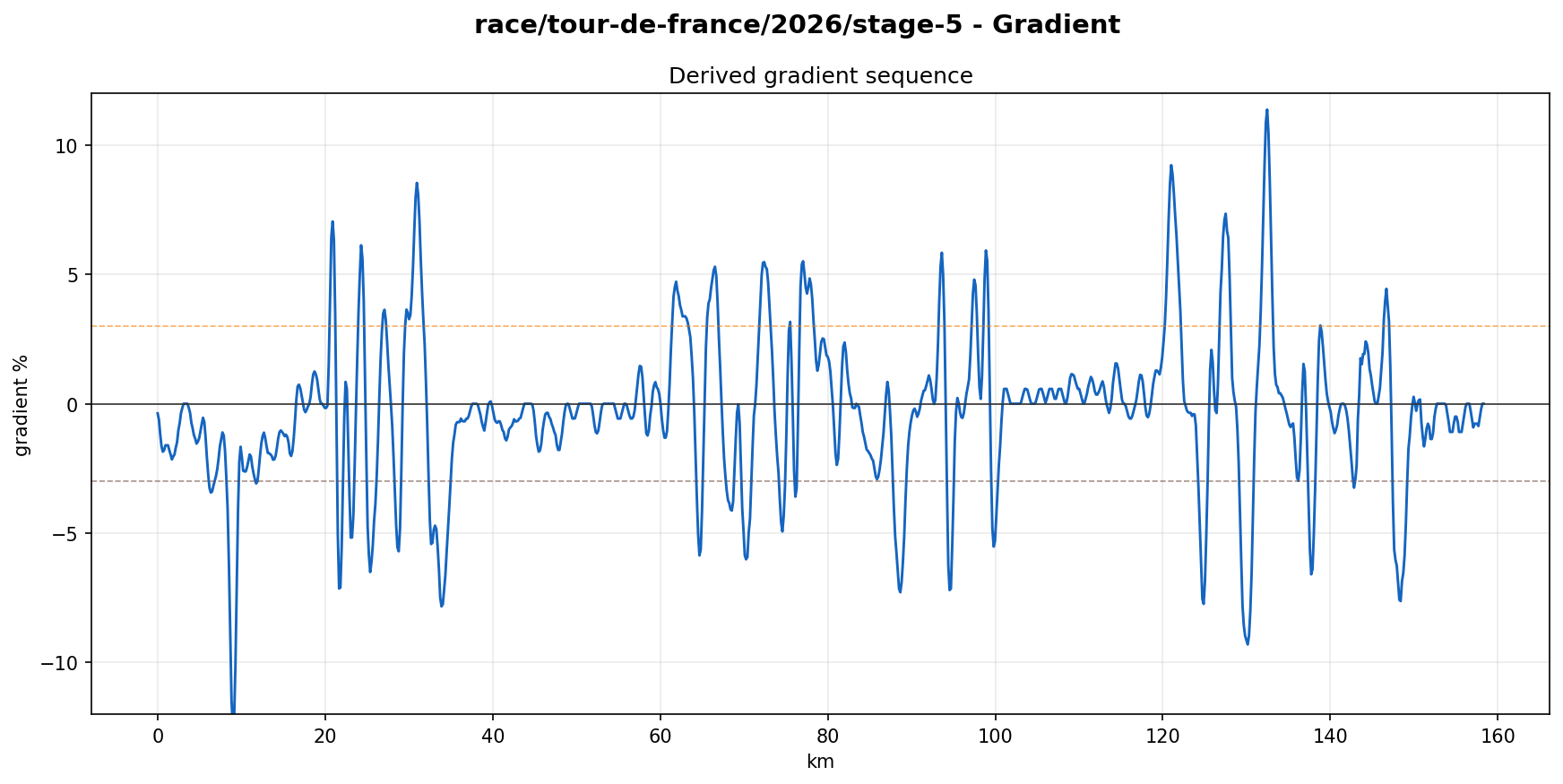
Stage 5 will tempt opportunists, with a hilly 158.3 km profile that will encourage attacks long before the finish. The Côte de Lamayou (1.1 km at 6.8%) and Côte de Baleix (1.3 km at 7.5%) in the final 40 km will sap the legs and could drop the heaviest sprinters.
Previous Stage Recap
Stage 4 from Carcassonne to Foix turned into the first big day for the attackers, and Lidl–Trek dictated it from the break. Mads Pedersen, coming off a difficult spring, was part of a strong move that detached itself in the rolling foothills, with the team executing a pre-planned raid that Steven de Jongh had meticulously mapped out beforehand. In the finale Pedersen still had support from Mathias Vacek and Quinn Simmons, and their control of the lead group set up a reduced sprint of ten riders in the streets of Foix.
Pedersen then finished off the dominant display, launching a powerful sprint to win ahead of teammate Simmons for a Lidl–Trek one-two. Raul Garcia Pierna took third, followed in by Marco Frigo and Ramses Debruyne, while Kevin Vauquelin and Sean Quinn also made the front split. Torstein Træen crossed in eighth, enough to pull on the yellow jersey, confirming the stage as a key early reshuffle of both stage-hunters’ ambitions and the general classification hierarchy.
The Route
The stage from Lannemezan to Pau will open with a long slide off the Plateau, the peloton dropping steadily through rolling farmland as height is shed and the race settles into the valley floors. The first half will feel deceptively gentle: undulating roads, low gradients and plenty of straight sections where sprint teams and breakaway hunters will both fancy their chances of shaping the day. It will be a phase where a move could gain time but might still sit within sight of a restless bunch, knowing that the more selective terrain will come much later.
Beyond the midpoint the profile will begin to stiffen, the rollers growing taller and more irregular as the route arcs towards Pau. The run through the countryside before Vic-en-Bigorre will already demand concentration, then the road will rise more convincingly, culminating in the punchy Côte de Lamayou at 1.1km at 6.8% and, a little closer to the finish, the sharper Côte de Baleix at 1.3km at 7.5%. These back‑loaded climbs will invite late attacks from puncheurs and breakaway specialists, while chipping away at the pure sprinters’ reserves.
From the top of Côte de Baleix the race will drop towards Pau on lumpy terrain that will keep the elastic tight but not necessarily broken, setting up either a reduced bunch sprint or a small-group dash. The finish will reward riders who can survive short, hard climbs and still unleash a powerful kick on fast roads: classics-style sprinters, versatile puncheurs, and opportunists who might slip away in the final hills if the chase falters.
Key Climbs:
- Côte de Lamayou — 1.1km at 6.8%, km 120
- Côte de Baleix — 1.3km at 7.5%, km 132
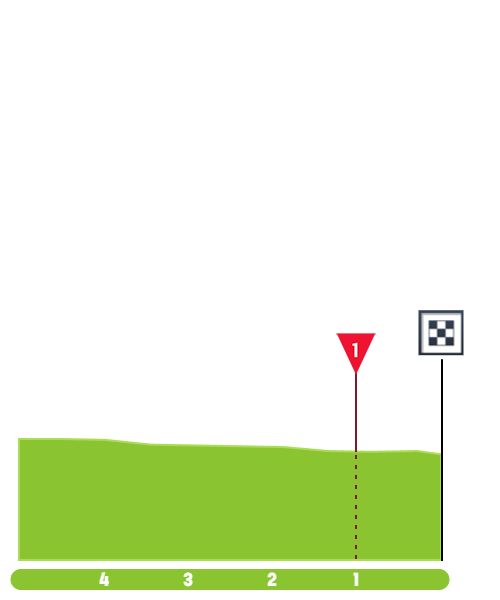
*26.3km from final summit to the finish.*
Weather
26°C | Patchy rain nearby | 13 km/h S
How It Might Unfold
The stage will likely open with breakaway specialists sensing a chance. Sprinter teams will try to keep the early move on a short leash, knowing the profile is not excessively hard. GC lineups will mainly focus on staying out of trouble, leaving the responsibility for tempo to those with fast finishers.
A selection could come on Côte de Lamayou and, especially, Côte de Baleix, where teams of classics-style sprinters and puncheur-sprinters might drive the pace to shed the pure fast men. Punchy climbers/rouleurs could launch stinging attacks on Côte de Baleix or on the draggy roads that follow, hoping to force a small group clear that might cooperate to Pau. If the sprinter teams keep numbers over the top, a reduced sprint of 60–80 riders will look a plausible outcome, favouring powerful finishers who can survive short efforts above threshold. But if the moves over Côte de Baleix fragment the bunch too much, a select group of opportunists could contest the stage rather than the full sprint hierarchy.
Contenders
The punchier fast men will likely define this finale. Biniam Girmay, Mads Pedersen and Jasper Philipsen are looking well-suited to a harder sprint whereas the purer dragstrip sprinters such as Tim Merlier and Olav Kooij will hope the late ramps will not be ridden full gas, because any softening of the run-in might tilt things their way. Riders like Mathieu van der Poel could play kingmaker, either dragging Jasper Philipsen to the line or gambling on a late attack if the favourites hesitate.
Predictions
1. ⭐⭐⭐ Jasper Philipsen
2. ⭐⭐⭐ Tim Merlier
3. ⭐⭐ Olav Kooij
4. ⭐⭐ Biniam Girmay
5. ⭐ Mads Pedersen
6. ⭐ Pavel Bittner
Predicted Winner
Tim Merlier