Tour De France 2026 – Stage 3
Post Series: Tour De France 2026
- 1.Tour De France 2026 – Stage 2
- 2.Tour De France 2026 – Stage 3
- 3.Tour De France 2026 – Stage 4
- 4.Tour De France 2026 – Stage 5
- 5.Tour De France 2026 – Stage 6
- 6.Tour De France 2026 – Stage 7
- 7.Tour De France 2026 – Stage 8
- 8.Tour De France 2026 – Stage 9
- 9.Tour De France 2026 – Stage 10
- 10.Tour De France 2026 – Stage 11
- 11.Tour De France 2026 – Stage 12
- 12.Tour De France 2026 – Stage 13
- 13.Tour De France 2026 – Stage 14
- 14.Tour De France 2026 – Stage 15
Granollers → Les Angles | 195.9 km | mountain
Stage 3 will heap sustained climbing on the peloton, with repeated ascents accumulating nearly 4,000 metres of elevation that should stretch the pure climbers and expose any early-season rust in the GC ranks. With its mountainous profile, this could be the first real sorting day where breakaway artists test how deep they can dig.
Previous Stage Recap
Stage 2 from Tarragona to Barcelona was another bruising day in Catalonia, with 168.5 hilly kilometres and roughly 2,500 metres of climbing that steadily thinned the bunch. The finale on the punchy streets of Barcelona turned the race into a reduced sprint, where UAE Team Emirates XRG played their cards to perfection. Isaac Del Toro slipped clear in the final kilometre and then finished the job in the uphill dash, taking his first Tour stage win. Tadej Pogacar closed behind and effectively granted his young teammate the victory, underscoring UAE’s early control of the race.
Behind the Emirati one‑two, Remco Evenepoel took third after having consciously let a gap open to Del Toro earlier on the run‑in, a gamble that cost him in the sprint. Jonas Vingegaard, on terrain he admitted was not ideal for him, limited the damage in fourth and kept the yellow jersey. Mattias Skjelmose, Tobias Halland Johannessen, Romain Gregoire and Paul Seixas all finished in the select front group, confirming a sharp early form among the puncheurs on the eve of the Pyrenean test.
The Route
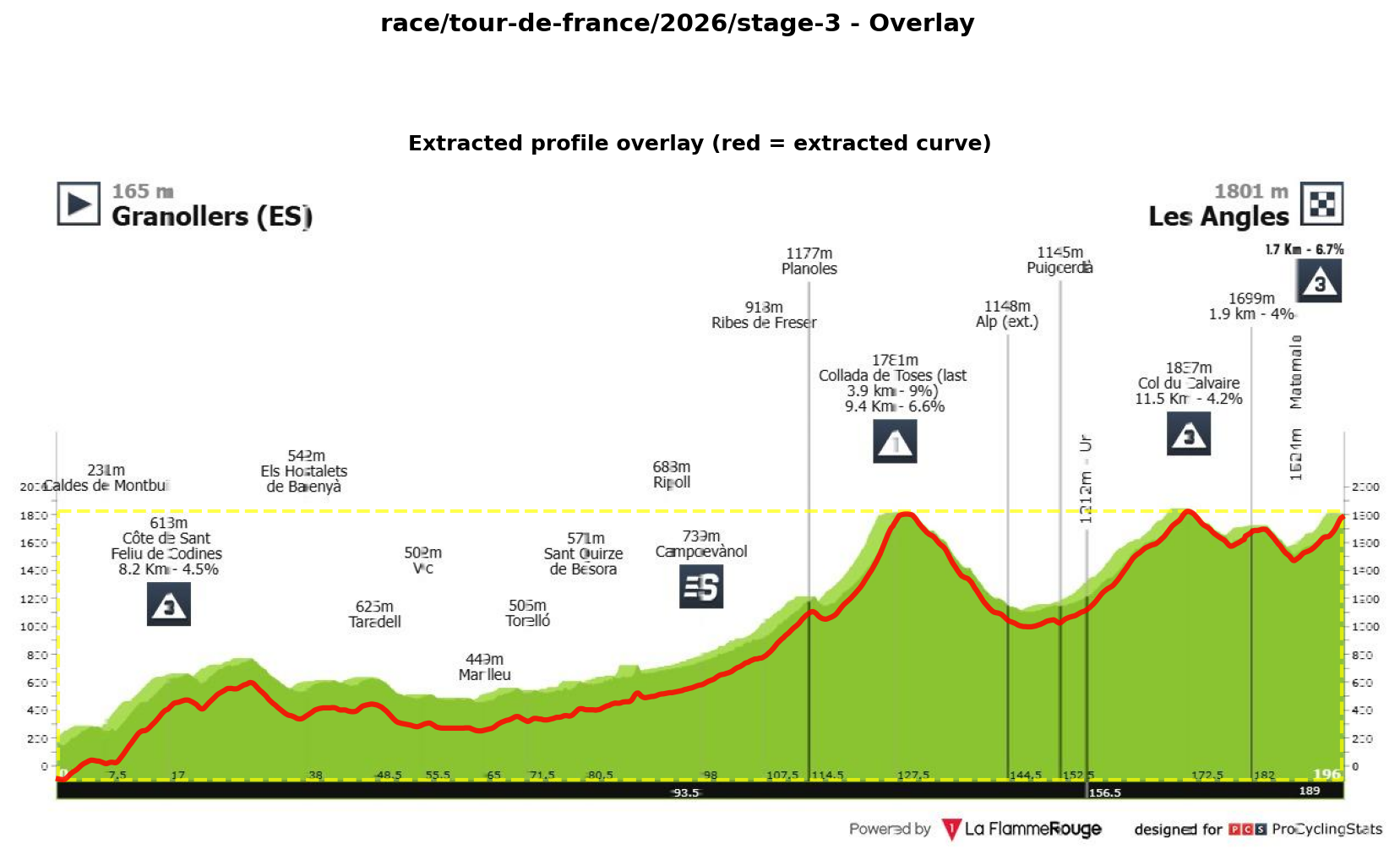
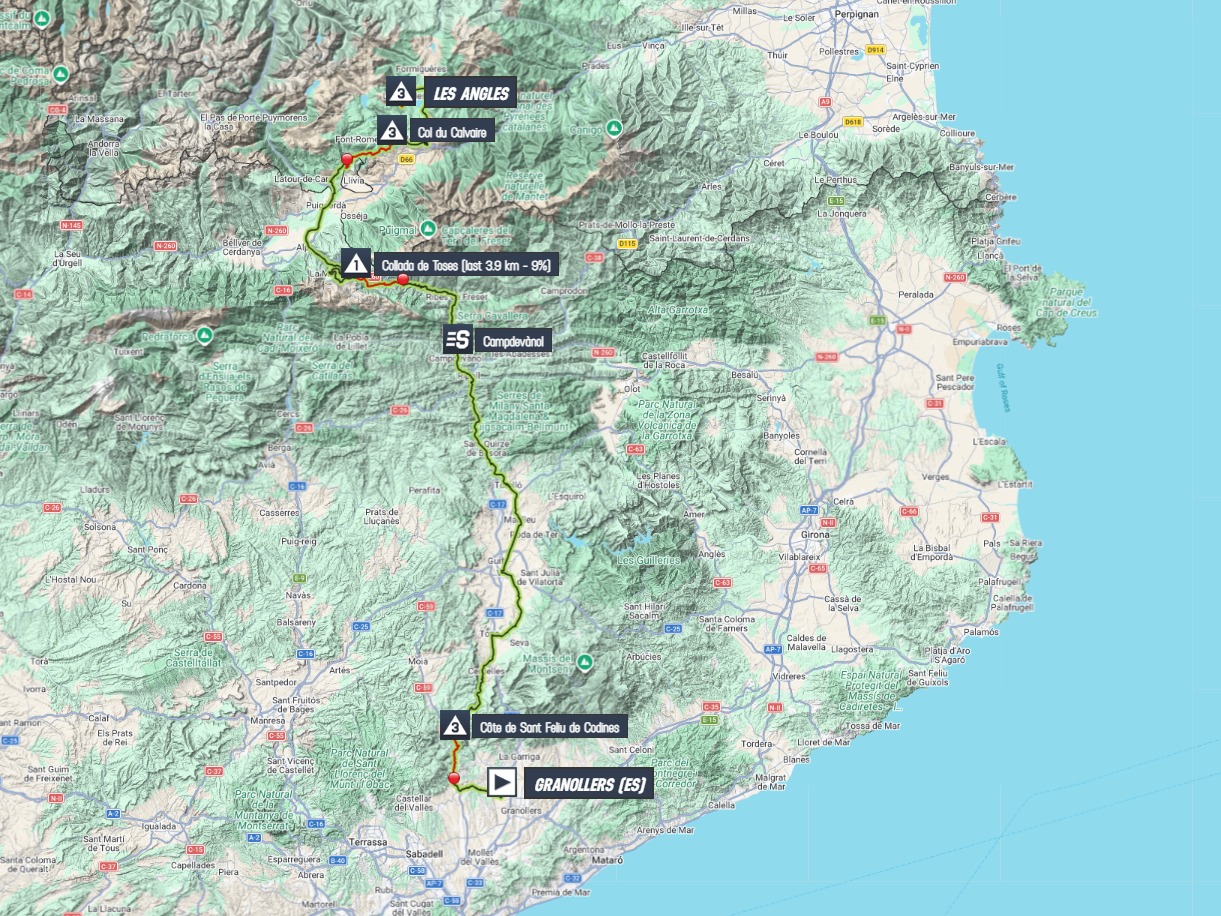
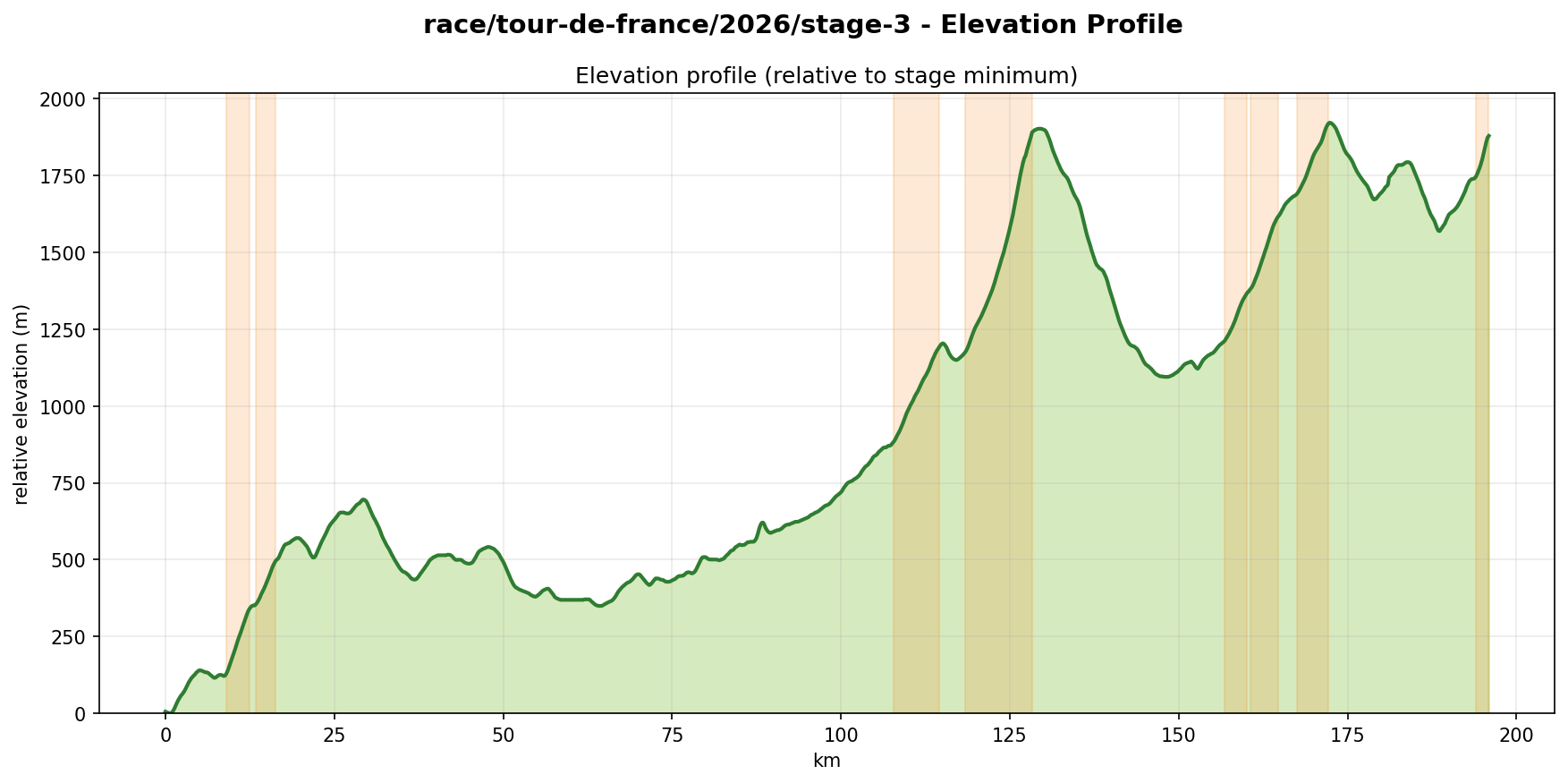
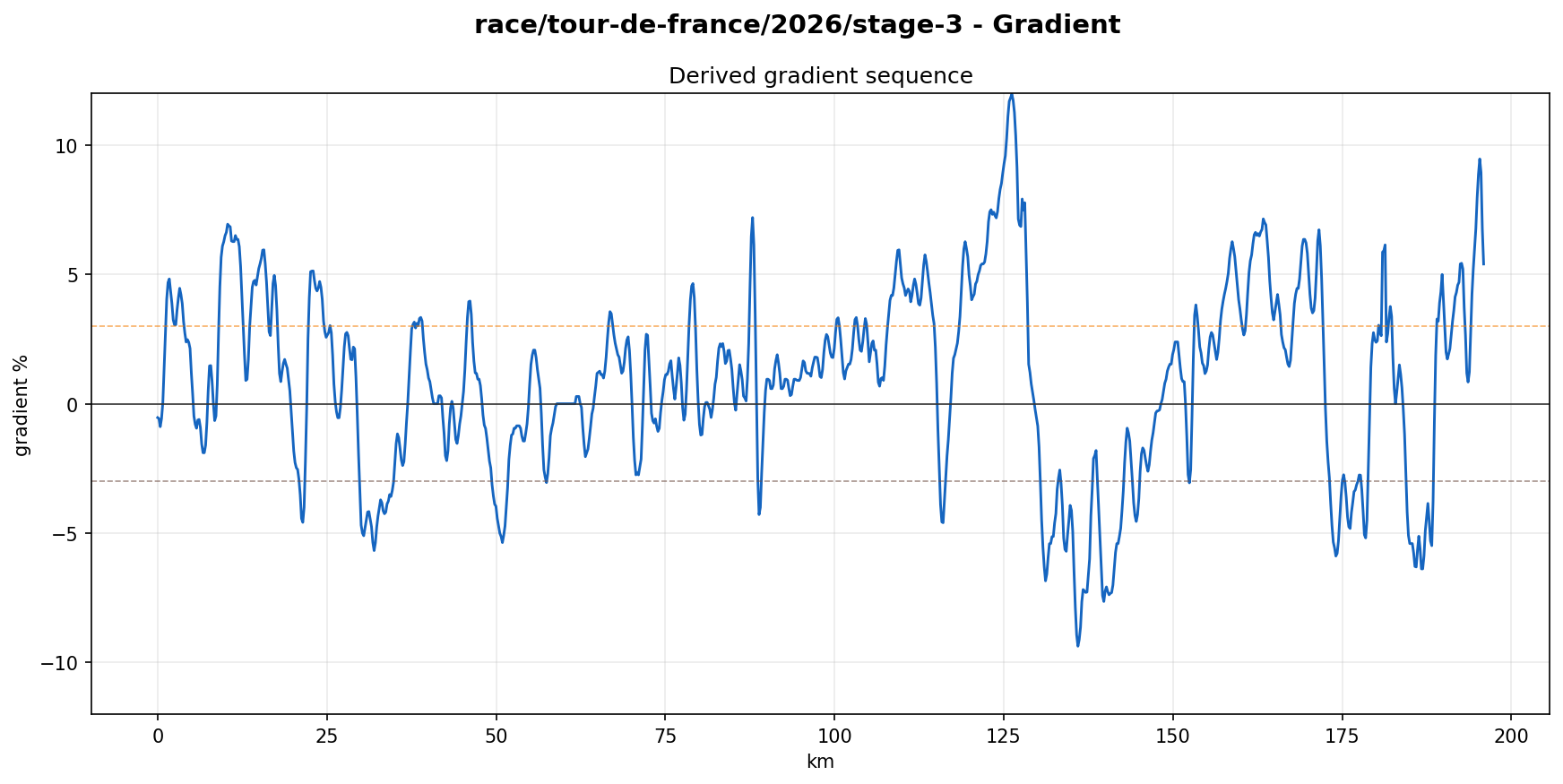
The road from Granollers will start climbing almost immediately, with a trio of medium-length ascents in the opening 25 kilometres that will lift the race out of the lowlands and onto rolling, wooded terrain. This busy start will invite an aggressive fight for the breakaway: the gradients around 5–6.5% early on will allow pure climbers and punchy all‑rounders to try to force a strong group clear, while the peloton will already be burning matches just to keep control. After this, the middle portion of the stage will settle into a long, gradual rise across Catalonia, the altitude creeping up rather than spiking, and the bunch will likely oscillate between moments of relative calm and hard tempo as teams decide how much rope they want to give the escapees.
The character of the day will change completely in the second half as the road ramps towards the high Pyrenean plateau. The long ascent in the middle of the stage will act as the gateway to the mountains proper, with sustained gradients over 10 km at 7.3% providing the first true test of the overall contenders and a natural point for GC teams to tighten the screw if the break still looks dangerous. From there, a saw-toothed finale of back‑to‑back climbs in the 3–5 km range will keep the pressure on; there will be little flat road to regroup, so any rider in difficulty could see gaps widen quickly.
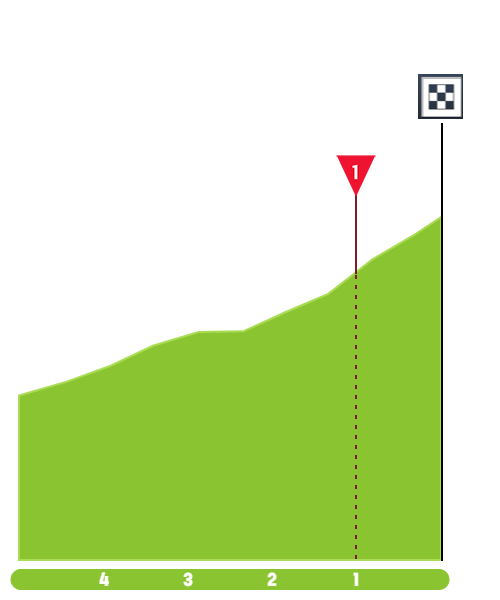
The finish at Les Angles will come at altitude after 3940 metres of climbing, on a final ramp that will demand a blend of endurance and a sharp uphill kick. It will likely suit pure climbers and GC contenders who handle repeated efforts well, but resilient breakaway specialists could still be in contention if the big teams hesitate. Whether the stage is decided by a reduced GC group or a strong escape, the last kilometres will reward those who can pace themselves through the earlier climbs and still find one last acceleration on the upper slopes.
Weather
27°C | Sunny | 4 km/h NNW
How It Might Unfold
The race will likely explode early, with the opening trio of climbs turning the fight for the break into a full-on selection. Pure climbers and KOM hunters will try to force a strong group clear, while teams with GC leaders might be content to let a sizeable move go if it does not threaten the overall. Once the race drops into the long mid-stage valley, the peloton will probably settle into a controlled tempo, with GC squads deciding whether to reel the escape back before the major ascent at kilometre 118 or allow the yellow jersey to pass to a breakaway specialist.
The real damage could come on the 10.0km climb at kilometre 118, where GC teams might lift the pace and start to isolate rivals before a technical descent and the double climb combination in the final 40 kilometres. Those late ascents, stacking fatigue and altitude, should whittle the front group down to elite climbers and overall contenders. The final ramp to the line looks tailor‑made for an explosive finale, so the stage win could come from a late solo attack or a reduced uphill sprint among the strongest GC leaders and punchy climbers.
Contenders
UAE will again put Isaac Del Toro and Tadej Pogačar at the front of the GC battle; Del Toro’s sparkling form and early lead could let Pogačar attack more freely, testing Remco Evenepoel and Jonas Vingegaard on every uphill drag. Skjelmose, Pidcock, Johannessen and Romain Grégoire will likely try to hang onto this quartet, limiting losses on the longer ascents while hoping the punchy finale keeps them in the mix for the stage.
With Visma not wedded to defending yellow, the door could be open for a strong breakaway. Ben Healy, Matthias Vacek, Tobas Foss, Michael Storer, Damiano Caruso, Mauro Schmid, Kevin Vauquelin, Luke Plapp, Einer Rubio and Romaine Gregoire all fit the profile of riders who could go long from distance.
Predictions
1. ⭐⭐⭐ Michael Storer
2. ⭐⭐⭐ Matthias Vacek
3. ⭐⭐ Tobias Foss
4. ⭐⭐ Ben Healy
5. ⭐ Mauro Schmid
6. ⭐ Romaine Gregoire
7. ⭐ Luke Plapp
Predicted Winner
Michael Storer