TOUR OF POLAND 2019 – OVERALL PREVIEW
The Tour of Poland/Tour de Pologne is the traditional one-week course that is used by numberous riders in the peloton to race themselves into form for the Vuelta. Because the race starts at the same date as the Classica San Sebastian a lot of big names are missing on this years line-up.
The last five winners are all still active within the professional cycling peloton:
2018 – Michal Kwiatkowski
2017 – Dylan Teuns
2016 – Tim Wellens
2015 – Ion Izagirre
2014 – Rafal Majka
Majka and Izagirre are participating in this years Tour of Poland, whereas Teuns and Wellens will participate in the Classica San Sebastian 2019. Kwiatkowski was supposed to defend his title this year, but recently announced -after a disappointing tour- that his body needs rest and he is physically not ready to defend his title.
One thing that we therefore know for sure is that this years Tour of Poland will have another winner as last years, which leads us to the route.
The Route
This years Tour of Poland consists of seven stages and is once again characterized by a combination of flat stages and hilly stages with punchy finishes.
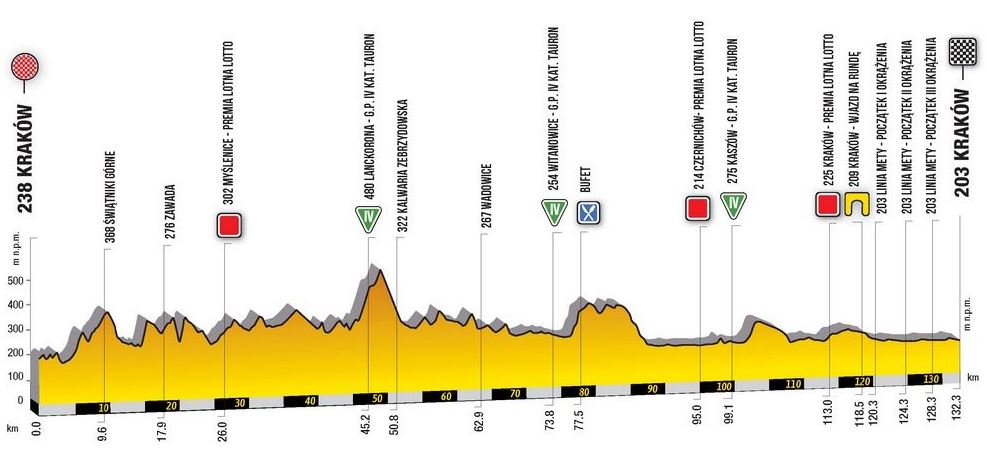
Stage 1: a fairly flat 132 km stage that starts and ends in Krakow with a lap circuit at the end of the stage. Should end in a sprint.
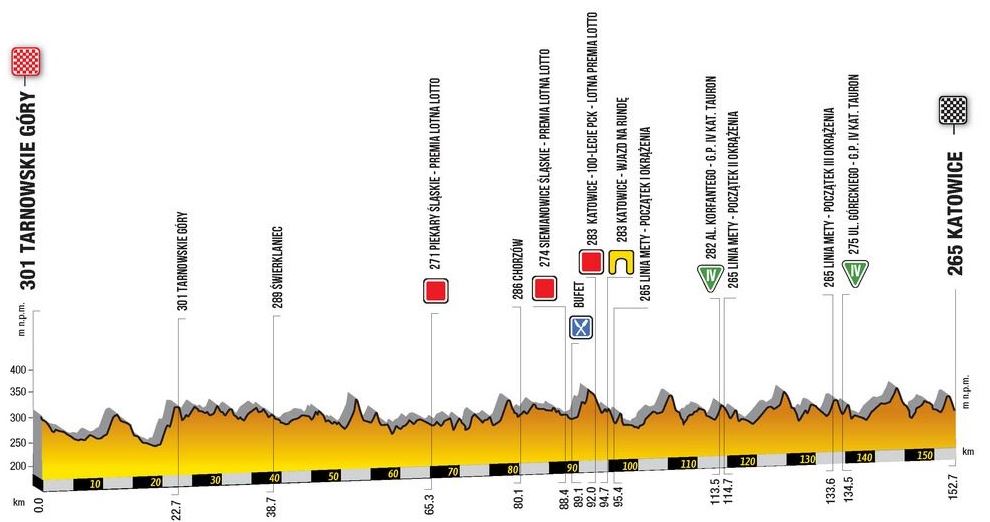
Stage 2: Another chance for the sprinters as the route takes the riders from Tarnowskie Gory to Katowice. There is some elevation in the final lap circuit but not enough to drop the sprinters. However, positioning will be important.
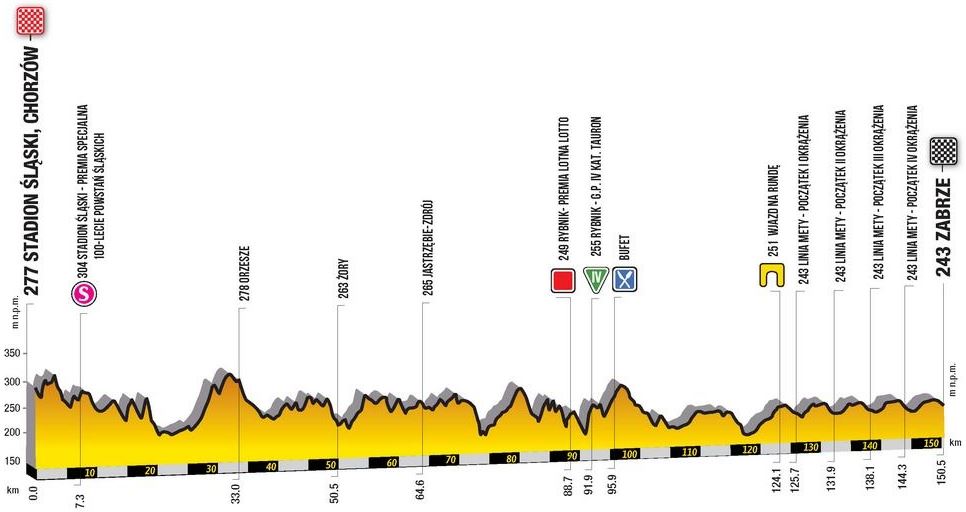
Stage 3: Another day another lap circuit. The third consecutive and probably final chance for the pure sprinters to challenge for the win in this 150km stage that takes us to Zabrze.
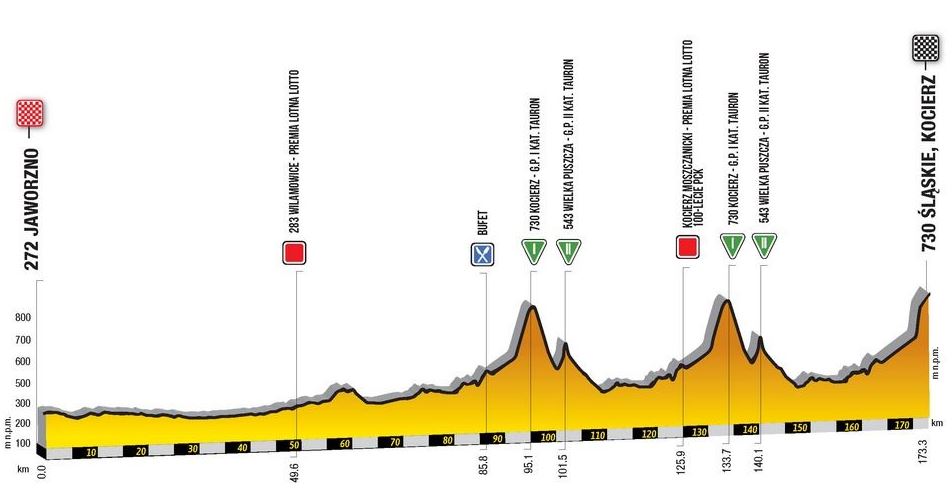
Stage 4: This is where it starts to get interesting for the guys with GC ambitions. This 173km stage features two 2nd and two 1st category climbs and end which an uphill finish. Strong puncheurs with GC ambitions could be looking to establish some time gaps here.
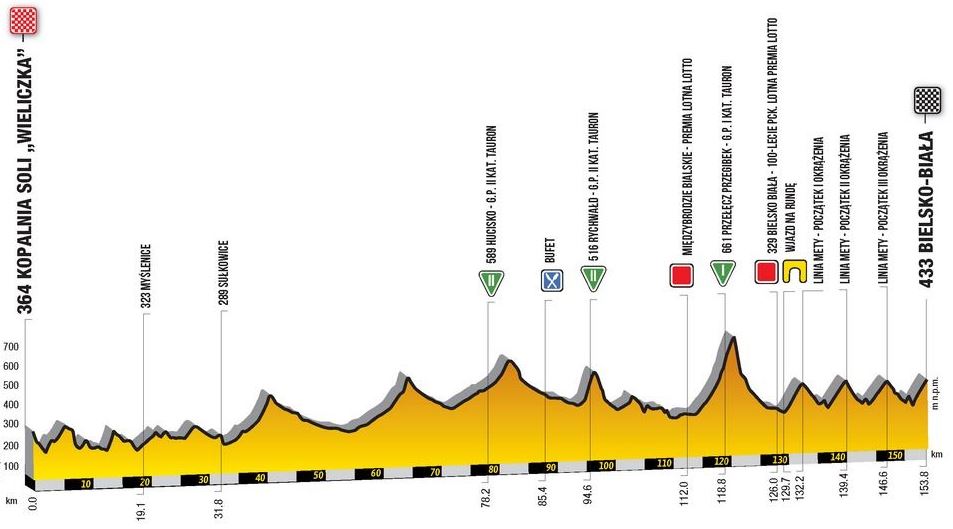
Stage 5: Another hilly stage that ends uphill. The finish is not that tough, and with the final two mountain stages in mind we do not expect big gaps here.
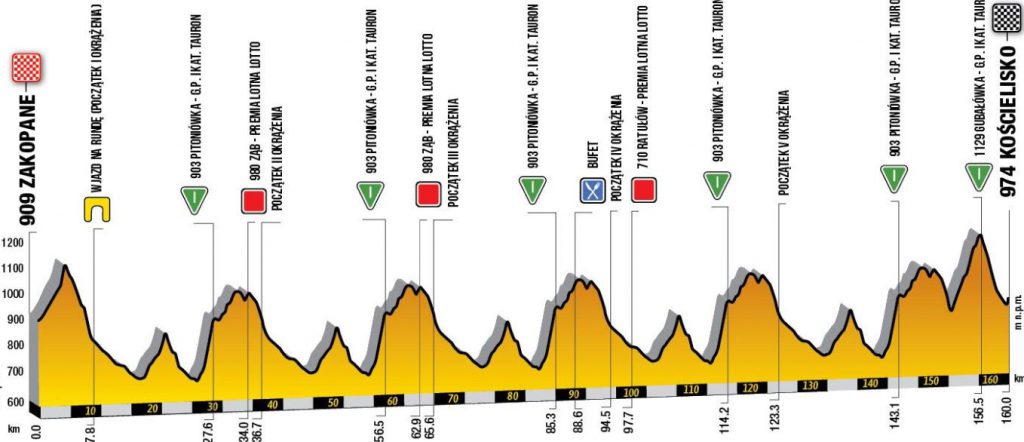
Stage 6: A proper mountain stage that features five rounds of 29 km each. Each round includes a 1st category climb which should result in tired legs once the lap circuit is completed. This stage finalizes with another 1st category climb and a descent into Koscielisko.
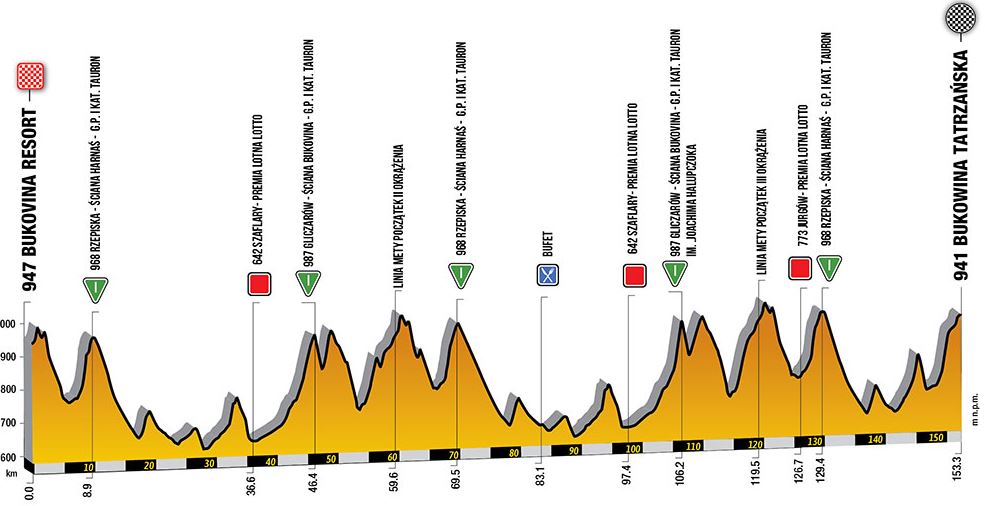
Stage 7: The final stage of this years Tour of Poland is a tough one. Another mountain stage with five 1st category climbs and an uphill finish. This is a stage where only the strongest of climbers will manage to stay upfront.
The Favorites
The route favors strong climbers that posess the punch to grab valueable bonus seconds along the way. INEOS, BORA, Astana all arrive with strong line-ups, but there are a lot of other potential candidates as well.
Sergio Higuita
Second in the Tour of California where he proved that he can climb with the best. As he is set to ride the Vuelta he will certainly be approaching top-form here. Even though he is still young, an in-form Higuita is a dangerous candidate for the podium or even for the win.
Miguel Angel Lopez
Has an amazing team to provide support with riders such as former winner Ion Izagirre, and riders like Hirt, Cataldo and Kudus. Given his track record and his climbing skills he should be challenging for the win here.
Rafael Majka/Davide Formolo
Both have the skills to challenge for the podium. With Majka as the more ‘consistent’ climber and Formolo as the rider with a stronger punch. Formolo showed to be in decent form with his recent win in the Italian National Championships
Pavel Sivakov
Made a good impression in the Tour of the Alps and manage to secure a 9th overal place in the Giro and a 2nd place in the Youth GC. Another dangerous outsider for the podium and for stage wins. Having Tao Geoghegan Hart alongside as second GC option for INEOS could work both for and against him.
Diego Ulissi
Has the punch to put time into his rivals on stages like stage four and will likely grab some bonus seconds along the way. The question is whether he can keep up with the best of climbers in the harder stages (six and seven)
Outsiders: Lambrecht, Antunes, Geoghegan-Hart, Pozzovivo, Betancur, Latour, I. Izagirre
The Winner:
Given the large amount of impressive climbers that are participating it is hard to pick a specific rider. As bonus seconds might play an important roll I will go with a stronger climber than Ulissi who yet has the punch to secure bonus seconds along the way: Pavel Sivakov. The absence of Kwiatkowski will present an unique opportunity to the young INEOS rider to win another one-week stage-race which he will grab with both hands. Other riders like Higuita and Miguel Angel Lopez will show strong results, but will be primarily focussed on displaying proper climbing form with the upcoming Vuelta being their main objective.