Tour De France 2026 – Stage 13
Post Series: Tour De France 2026
- 1.Tour De France 2026 – Stage 2
- 2.Tour De France 2026 – Stage 3
- 3.Tour De France 2026 – Stage 4
- 4.Tour De France 2026 – Stage 5
- 5.Tour De France 2026 – Stage 6
- 6.Tour De France 2026 – Stage 7
- 7.Tour De France 2026 – Stage 8
- 8.Tour De France 2026 – Stage 9
- 9.Tour De France 2026 – Stage 10
- 10.Tour De France 2026 – Stage 11
- 11.Tour De France 2026 – Stage 12
- 12.Tour De France 2026 – Stage 13
- 13.Tour De France 2026 – Stage 14
- 14.Tour De France 2026 – Stage 15
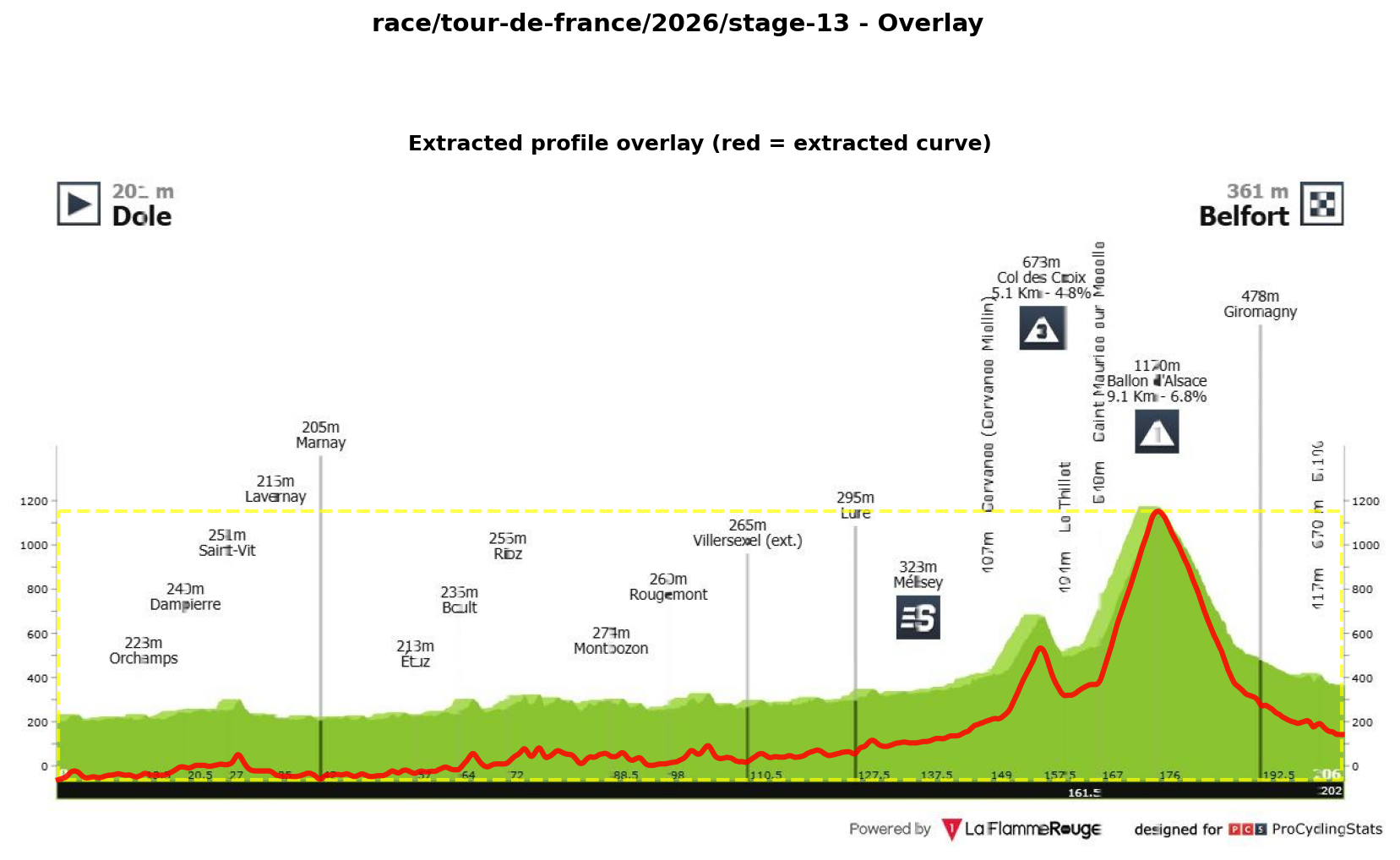
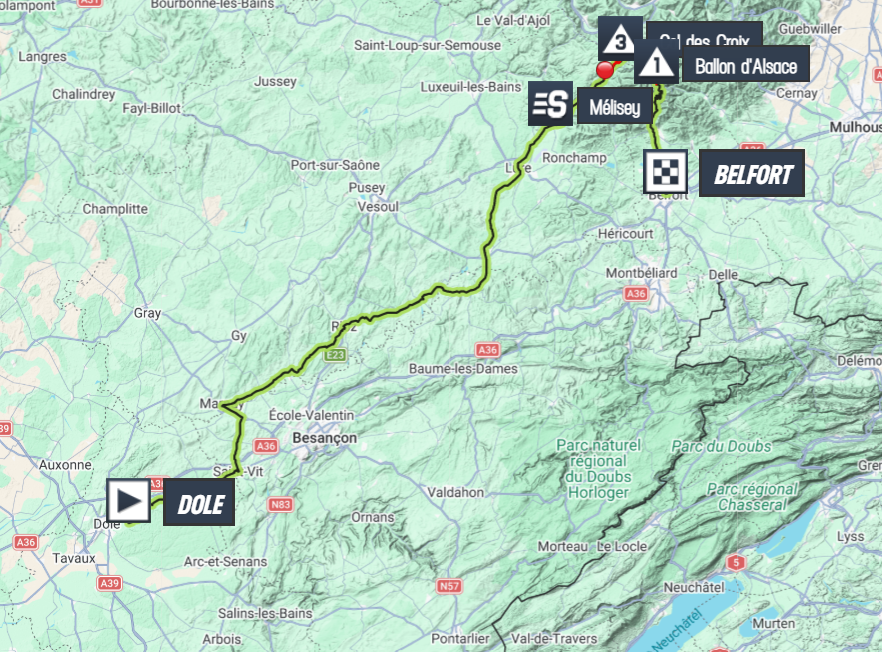
Dole → Belfort | 205.8 km | hilly
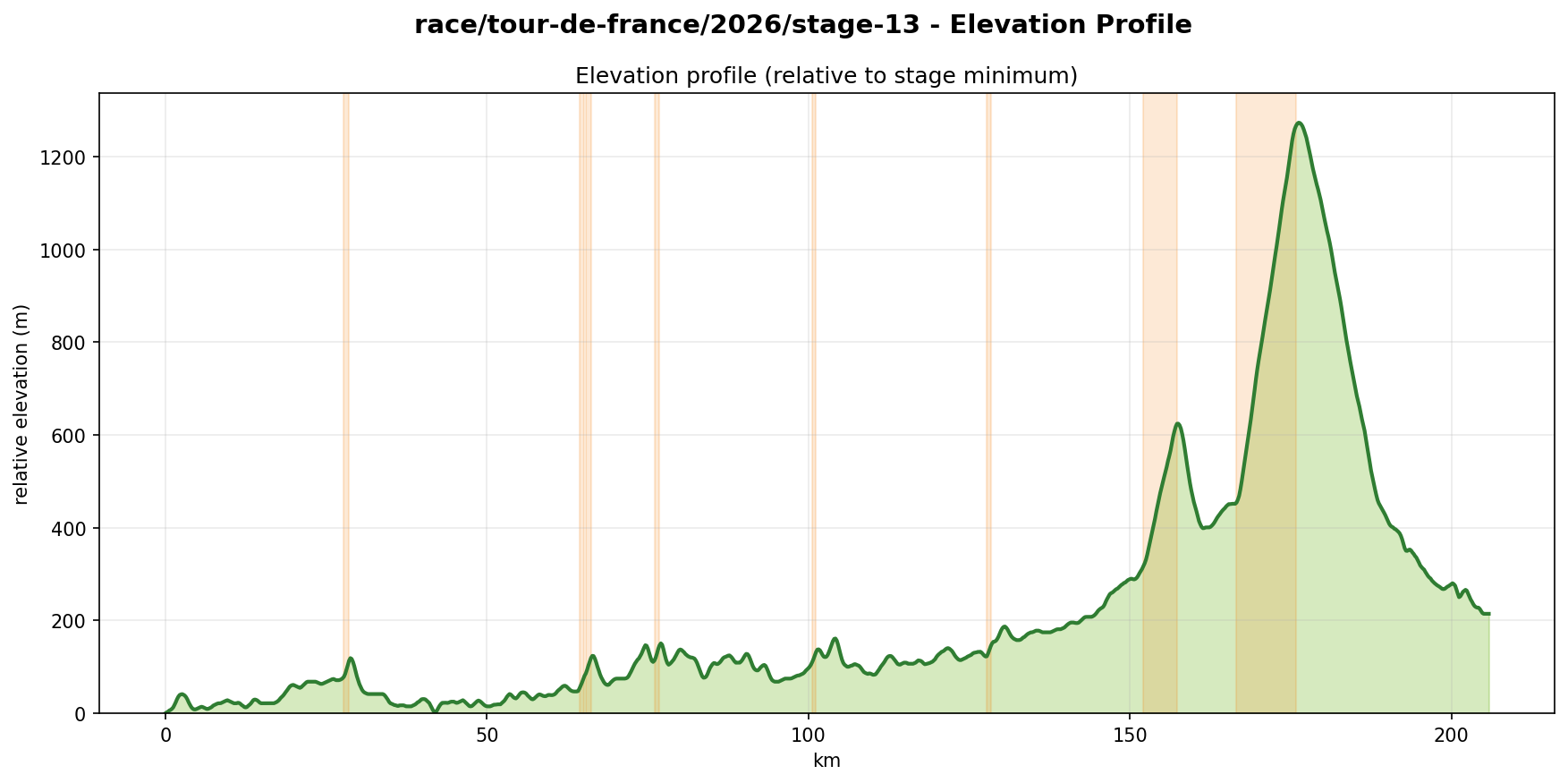
Stage 13 will tease the riders with a rollercoaster of climbs that never truly bite, but never really let go either, inviting chaos from opportunists and breakaway specialists. With the 205.8 km hilly route and 2309 m of elevation constantly on the up-and-down, this will feel like a long ambush rather than a straightforward transition, and could tempt aggressive racing from far out.
Previous Stage Recap
Stage 12 from Circuit Nevers Magny-Cours to Chalon-sur-Saône was another flat, nervous day that ended in a full-blooded bunch sprint over 179.1 kilometers. After a largely controlled run-in, the finale turned chaotic, with lead-out trains splintering and riders fanning across the road. In that turmoil, Soudal Quick-Step again timed it best: Tim Merlier launched late and powered to his third stage win of this Tour, extending his dominance in the pure sprints and underlining the value of Jasper Stuyven’s experienced piloting.
Behind Merlier, Olav Kooij, Jasper Philipsen and Biniam Girmay filled the podium places, while Milan Fretin’s fifth place confirmed his steady rise among the fast men. The sprint also carried a cost: a mass crash in the final meters forced Jenno Berckmoes to abandon with a broken collarbone, and Vlad Van Mechelen was relegated for his role in the incident. Mads Pedersen received a warning for an earlier move in the intermediate sprint, a reminder that the commissaires were watching closely as the Tour’s sprint chapter started to close and the race tilted toward the climbers and attackers.
The Route
The road from Dole will ease the riders in gently, rolling through low, green countryside with only nagging bumps to interrupt the rhythm. For more than 150 kilometres the profile will never truly bite, but it will rarely settle either: small rises, false flats and draggy stretches will keep the bunch stretched and could encourage a lively early battle as breakaway hunters try to establish a move. Teams with fast finishers will likely be content to let something go, knowing the real selection will only come deep into the stage.
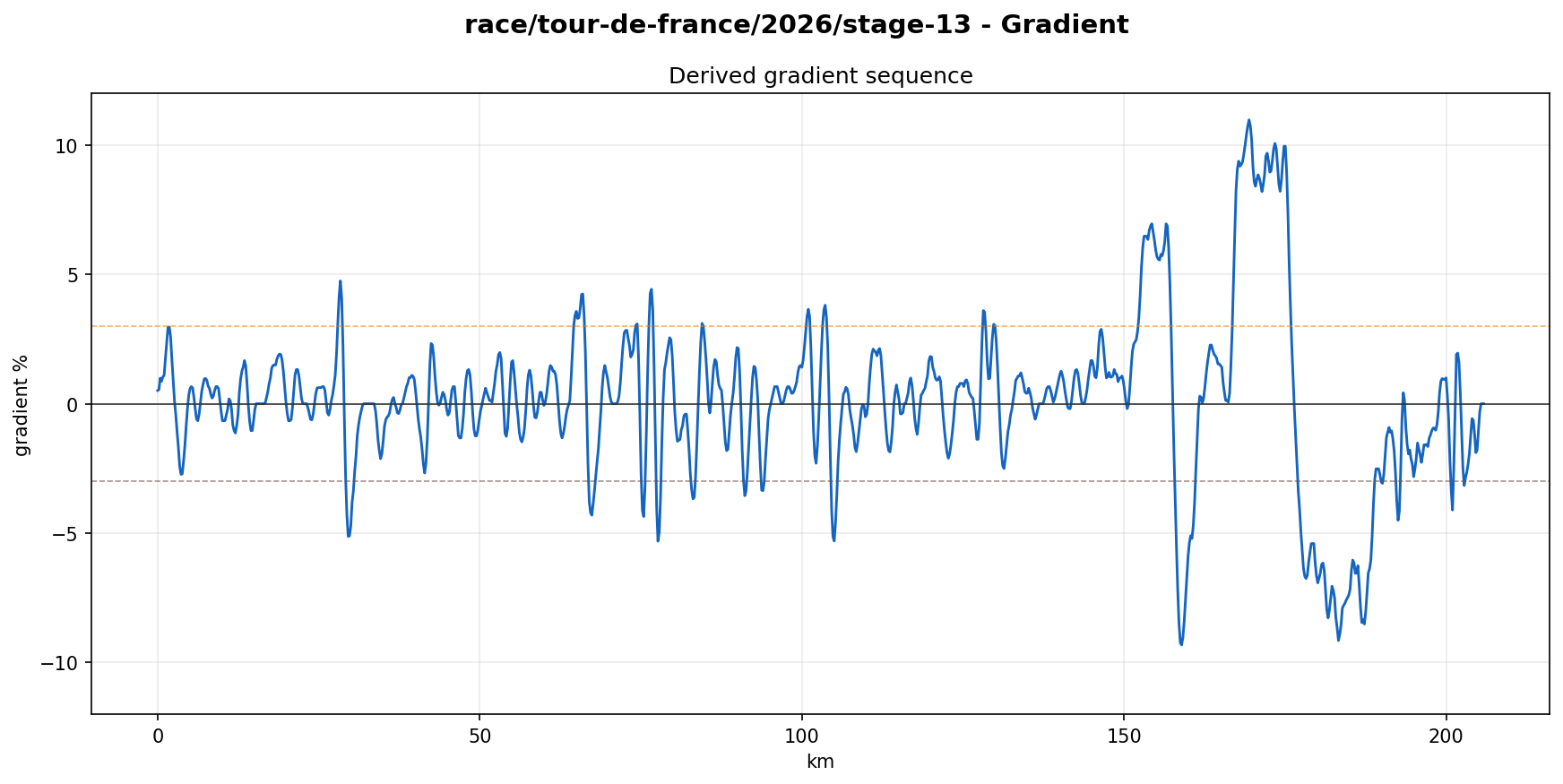
As the race approaches the Vosges, the terrain will begin to tilt upwards in earnest and the day will suddenly feel very different. The approach to the Ballon d’Alsace will already be on rising roads, before the climb itself rears up: 9.1km at 6.9% at kilometre 167 will form a long, steady test where climbing specialists and aggressive puncheurs could try to rip things apart. Over the top, there will still be a sizeable chunk of racing left, but the high-speed descent and undulating run-in towards Belfort will favour organised chasing and committed attacks in equal measure.
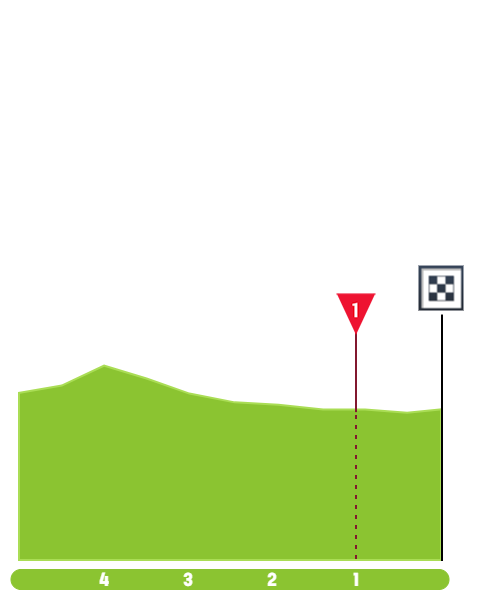
The finish in Belfort will come after 205.8km and 2309m of accumulated climbing, so even if the peloton regroups, this is likely to be a selective sprint rather than a drag‑race for the pure sprinters. A reduced bunch of resilient fast men could fight it out if their teams keep a lid on the aggression over the Ballon d’Alsace, but the combination of distance and that late climb will also give punchy all‑rounders and breakaway specialists genuine hope of surviving ahead of a thinned‑out peloton.
Key Climbs:
- Ballon d’Alsace — 9.1km at 6.9%, km 167
Weather
28°C | Sunny | 15 km/h W
How It Might Unfold
The longest day of the Tour will encourage a sizeable breakaway to form early, with punchy rouleurs and all‑round climbers eager to escape the control that dominated stage 12. Sprinter teams will have little incentive to chase on this terrain, so responsibility for the tempo will likely fall to squads with breakaway hunters and maybe a couple of GC outfits protecting overall interests. With the serious climbing only arriving deep into the stage, the move could build a big buffer before the finale. By the time the race reaches the foot of Ballon d’Alsace, the peloton and the break both could be reduced and increasingly nervous.
The real selection will likely happen on Ballon d’Alsace, where lighter climbers and puncheurs will try to ride clear and daredevil descenders could press any advantage on the long drop towards Belfort. GC leaders might ride defensively, marking each other rather than fully committing, which could leave room for strong attackers from second‑tier teams to slip away over the top. If the gaps remain small, the fast finishers who survive the climb in a reduced group will sense a rare chance and their teams will try to reorganise for a sprint in Belfort. A late counterattack inside the final 10 kilometres, however, could still upset that scenario if the chase hesitates after such a draining day.
Contenders
Puncheur‑climbers will set the tone. Tadej Pogačar will not need to take major risks for the stage, but if the break is within reach near Belfort he could still turn this into another statement ride or setup Isaac Del Toro.
If the big names let the break go, the attacking brigade could come to the fore. Mathieu van der Poel will relish a long, hard day that still ends in a punchy effort, while riders like Quinn Simmons, Maxim van Gils, Mauro Schmid and Tobias Halland Johannessen could emerge from a strong, multi‑team move. Romain Grégoire, Alex Aranburu and Michael Matthews will be one of the most intriguing options if the break features versatile finishers rather than pure climbers.
Predictions
1. ⭐⭐⭐ Tobias Haalland Johannessen
2. ⭐⭐ Quinn Simmons
3. ⭐⭐ Maxim van Gils
4. ⭐ Mauro Schmid
5. ⭐ Romain Gregoire
6. ⭐ Michael Matthews
6. ⭐ Pablo Castrillo
Predicted Winner
Tobias Haalland Johannessen